Showing posts with label Outside of AAAC. Show all posts
Tuesday, August 6, 2019
Public Art in NYC Chinatown: the Gateways

In 2017 DOT (Department of Transportation) issued an RFP (Request for Proposal) which stated: 

The New York City Department of Transportation, in collaboration with the Chinatown Partnership and Van Alen Institute, is initiating Gateways to Chinatown, a design initiative seeking innovative proposals to plan, design and construct a symbolic and functional landmark at the nexus of Manhattan’s Chinatown and the southern entrance to Little Italy’s historic Mulberry and Mott streets. The overarching goal of the project is to provide a new marker for Chinatown, Little Italy, and the surrounding neighborhoods in Lower Manhattan to engender pride of place, foster connectivity and cultural and social identity, and stimulate economic development. This iconic new structure and public space will be located on a triangular traffic island at a key pedestrian node bounded by Canal Street, Baxter Street and Walker Street. ( June 19, 2017 “Proposal Due Date”)

The effort builds on numerous previous plans, such as the community-consensus building meetings supporting the 1974 “Chinatown Street Revitalization Study” organized by the NYC Department of
 City Planning, “America’s Chinatown: A Community Plan” completed in 2004 by Asian 
Americans for Equality, the Chinese Consolidated Benevolent Association’s 2007 proposal for a gateway at Canal Street, and a 2012-13 collaboration with students of the Urban Design Studio at the New York City College of Technology.

July 19, 2019 AAAC sent the following open letter to DOT after a CB#1 hearing to discuss the RFP results. 

Dear Anthony Notaro (Department of Transportation),

At the Chinatown Gateway meeting I raised the issue of the absence of community input in this process. This has been a historical pattern. This is an opportunity to write you and document some of what this community has experienced including my organization Asian American Arts Centre (AAAC).

AAAC, founded in 1974, began its visual art exhibition program in 1983, and its Public Art in Chinatown in 1988 towards a contemporary image for Chinatown and Asian Americans. Mel Chin was in that exhibition – now so prominent, he also submitted a proposal to this Gateway project through AAAC in 2017 but somehow he was disqualified.

Several community people are here for this meeting even though news of it we only a few days ago, For years there has been little if any effort to speak to community. Govt agencies for decades have sustained a pattern of city state and federal actions to push through projects regardless of community.

It was mentioned how twelve years ago planning for this triangle began. The five nfp (not-for-profit) arts organizations were promised how the marketing of our cultural offerings would be promoted by the kiosk built there. Though we met with the designer of the map that is used by so many visitors there he could not change the map nor include any of the other nfp groups. Only MoCA was included. The kiosk mostly promotes Broadway plays and even the young people staffing it are resistant to including local cultural event flyers.

Twelve years ago CPLDC (Chinatown Partnership Local Development Corporation) sought 5 gate options be considered but could never get past NYC Arts Commission and their bias against anything traditional. Unlike San Francisco and many other American cities where traditional architectural forms are welcome. The gate proposed for Canal St was not allowed and thus restricted to the triangle off Baxter St.

This was not the first time public art has been proposed on this site. I recall being asked for a written piece many years ago on a proposal for work quite similar to what stands by Seward Park on Essex and East Broadway. It is a dark reddish monumental shape. Phallic stone fountains across Asia look very similar. The one proposed for Baxter St was white marble.

If I had to speak to the image of the proposed public art project I would refer back to this history. This time it's a phallic shape in denial, thus it is sliced up into cylinders and punctured with holes.


How to account for such a disconnect between government agencies and the communities they are to serve? The last comment from CB 1 in reviewing the proposal and hearing community comments was, “The procurement process is flawed!”. I felt the comments from the board members were quite fair and insightful in describing the image and experience if the proposed piece were installed. Particularly the final comment seemed to take into account the whole track record of this project.

In the community we can recall the public art of Marshall Lin that stands in Chatham Square. When it was installed it had several plaques with statements about the history, why Marshall Lin was being honored having fought against the British in the Opium War and was the first to say 'No" to drugs. About a year later the Arts Commission removed all to clean but would not return those plaques.

Last year a book was published in Hawaii called Abstract Expressionism: Looking East from the Far West - in which it was noted, now widely accepted how Clement Greenberg, the advocate for abstract expressionism in the 60s, claimed only for political motives 'Action Painting' had nothing to do with the Asian tradition of calligraphic brush work. And recently the art critic John Yau commented there were still some critics of his ilk in NYC. The resistance to an Asian cultural presence in New York's cultural circles is something to contend with. Unfortunately the local community is more deeply impacted by this bias than most realize.

Lawrence Ferlinghetti wrote in one of his poem that the city fathers allow the Chinese dragon out to dance through San Francisco Chinatown once a year only to lock it back up into a basement hovel.

When will the time come when cultural diversity, particularly with the cultures of Asia, be regarded as a asset, not just for museum walls.

Bob Lee

AAAC catalogue: Public Art in Chinatown 1988


A letter written to DOT and Gateway applicants in June, 2017 

Dear Potential Gateways to Chinatown Applicants,

Asian American Arts Centre as an visual arts organization that has specialized on Asian American artists, offers insights into the sensibility of many such artists during this opportunity to apply for Canal Street “Gate” RFP. These selected artists' images may serve as an introduction or as a compliment to your knowledge and experience.

Local prominence


Tomie Arai 

Corky Lee


Relay to public art 


Mel Chin

Ming Fay

Mei Ling Hom (1)      (2) 

Soon Im Kim

Mikyung Kim

Toshinori Kuga

Yin Peet


Unlike mainstream

Sung Ho Choi

Ken Fukushima

Eunjung Hwang

Heejung Kim (1)       (2) 


Reinvented Asian sensibility

Chao Chung-Hsiang

Emily Cheng

Columbia Fiero

John Yoyogi Fortes

Colette Fu

Hisako Hibi

Sin-ying Ho

Yun Fei Ji

Mike Kanemitsu

Jung Hyang Kim

Amy Kao


Community motifs


Sung Ho Choi

Fung Ming Chip

Nancy Hom

Teh Ching Hsieh

Ming Fay


Racial perceptions 

Wei In Chen 

Kazuko Miyamoto

Roger Shimomura

Tseng Kwong Chi

Charles Yuen


Famous


Teh Ching Hsieh

Mel Chin 


Aesthetic ‘expansion arts’


Soon Im Kim


James Kuo 

Amy Loewan

If you wish I can give a brief intro to any of these artists you chose.


With Kind Regards,

Bob
Read more
Thursday, July 20, 2017
A Tribute to Toshio Sasaki

This year marks 10th year since world-renown sculptor and architect, Toshio Sasaki (1946 - 2007), passed away. He was one of the main artists AAAC worked with during his long career. By the end, he vied to bring his aesthetic ideas to the World Trade Center memorial and came close to achieving it. To commemorate him and his work, this summer the OSSAM Gallery in Brooklyn hosted a memorial exhibition that included his works, as well as works by well-known artist, Osamu Shimoda (1924 - 2000). These two extraordinary artists, born in Japan and later based in the United States, bridged the gap between the East and the West. Sasaki, in particular, fused the East and West in his creative and illuminating sculptural and architectural designs.

Born in Kyoto, Japan in 1947, Toshio Sasaki studied art and architecture at the Aichi University of Fine Arts. He later moved into New York City in 1974, creating fantastic works in public spaces. In 1988, he exhibited Sun Gate, a drawing, for AAAC’s Exhibit for Public Art in Chinatown and it was later included in AAAC’s catalogue.

Sun Gate by Toshio Sasaki, 1988 

The piece is a sketch of the Manhattan Bridge and an idea for a monument to its entrance. According to Sasaki, “I hope the Gate will impart a new ‘time’ irradiation to the old society, and traditional meanings. I think of this Sun Gate rising like a phoenix from the ashes of its own urban past.” Although the gate was never constructed, it shows Sasaki’s understanding of complex geometric forms and principles, as well as his knowledge of the neighborhood and its history. 

Sasaki’s interest and creativity in designing monuments was translated in his submission for the World Trade Center Site Memorial Competition in 2003. His memorial entry, titled Inversion of Light, was a moving creation that sought to incorporate the four universal elements: light, water, air, and earth. For Sasaki, each element represented a different aspect of being and living. The memorial, which included a wall of names, a street-level park, and a reflection pool, was to be a serene, peaceful place for remembrance and contemplation. Sasaki emphasized that his memorial was to be a “living memorial,” one dedicated to peace, truth, and posterity. While Sasaki’s proposal was ultimately not selected, like the Sun Gate, this entry pushed the boundaries of memorial architecture. To learn more about and see Sasaki’s design, please visit this link: http://www.world-memorial.org/Tribute/NY/Inversion/inversion.html.

Back in the fall of 2012, AAAC visited Sasaki’s studio, maintained by his wife, Miyo Sasaki. She works to support young Japanese artists, providing them with studio space and general support. While the studio is a space for this new up-and-coming artists, it is still home to Toshio’s work. To learn more about and see Toshio Sasaki’s studio, please read the 2012 article: http://artspiral.blogspot.com/2012/12/toshio-sasakis-studio.html. More recently, Miyo has created and completed a video about her husband. This short video, not currently available for public viewing, was a retrospective, documenting Sasaki’s great accomplishments throughout his life. Please reach out to AAAC or Miyo Sasaki to learn more about this video.

Although it has been 10 years since Sasaki’s passing, his ingenuity and artistic talent continue to live on in the art communities he was a part of. As an accomplished artist, sculptor, and architect, Sasaki had a profound effect on the aesthetic and artistic concepts of geometry, space, and time. He is a pioneer in the Asian and Asian American arts world.


Read more
Thursday, May 11, 2017
A Tales of Two Islands: Reporting Back from the Banda Islands

Rhunhattan: A Tale of Two Islands
 On May 4th, Beatrice Glow presented her work Rhunhattan: A Tale of Two Islands. The project " explores a pivotal moment during the birth of globalization when the Dutch and the British were locked in a stalemate during the Spice Wars."


Beatrice Glow 


For more information about Rhunhattan: A Tale of Two Islands and Beatrice Glowhttp://beatriceglow.org/rhunhattan/
Read more
Amy Khoshbin: Redefining Art, Politics, and Their Intersectionality

VOTE AMY KHOSHBIN: CITY COUNCIL DISTRICT 39
Amy Khoshbin is running for City Council in District 39 of Brooklyn in the Fall 2017 Race. According to her website, "Khoshbin is running as an information-gathering strategy, to demystify the supposedly complex structures of government and to empower others to run for office." Reviewing her official page, she is presented as a very common politician who wants to tackle trendy issues:
  • Prioritize a culture that supports creativity -- "we all start as creative individuals when we're children"
  • Put Brooklyn citizens before politics and corporate interests
  • Empower Brooklyn citizens with skills to create their own livelihoods and not be completely dependent on a corporate system
  • Dismantle all white supremacist systems
  • Ensure Brooklyn is a safe space for immigrants
  • Value Brooklynites -- their skills, talents, and insights -- to help strengthen the economic, social, cultural, and environmental state of Brooklyn
  • "Build a future we want to see, together"
What separates Khoshbin from other traditional politicians is her extensive background in art. Khoshbin is "an Iranian-American Brooklyn-based artist merging performance, video, collage, costume and sound to examine our individual and collective compulsion to create, transform, and sometimes destroy the stories of who we are and who we think we should be. She produces media and mythologies using humor and a handmade aesthetic to throw a counterpunch at the high-definition, profit-generating codes and signals that American audiences are trained and accustomed to consuming." 

Recently, her work was featured in the exhibition Archival Alchemy: South Asian Women's Creative Collection, located at Abrons Art Center. Her piece, entitled Scheherazade Project (2017), is a multimedia project that "merges live performance and an original score with animated Persian illustrations, images from the Iranian Revolution, found and newly created film footage, and immersive video game tropes to explore the power of storytelling, past and present."


There has not been a politician, in recent years, that frequently engages with communities through the means of art. If Amy Khoshbin's campaign is a success, she could redefine the relationship art and politics continue to endure. She has the potential to construct innovative methods to interact with individuals within the community and within the government: as a result, the bridge between politicians and the people could be gapped. 

For more information about Amy Khoshbin: http://tinyscissors.com
To view more of her work: https://vimeo.com/semiotech
To view The Scheherazade Projecthttps://vimeo.com/198574125

Read more
Thursday, May 4, 2017
Indira Freitas Johnson: An Artist Who Creates Hybrids Aimed to Advocate for Empathy, Community, and Peace

"I use symbols, rituals, and traditional expression as a means to discover, interpret and balance the culture and philosophy of my home country, India, with the here and now of my life in the U.S... I believe that combining the material and spiritual of in ritual expression is a way to discover and interpret the meaning of life. Ritual can transform meaning or objects and make them function physically as well as spiritually. Thus I believe that when common found objects are re-introduced into society, and presented in a ritualistic format, they acquire a renewed energy and the idea of sacredness of everyday life is confirmed" - Indira Freitas Johnson

Indira Freitas Johnson is a self-taught artist and an educator on nonviolence. Coincidentally, both of her occupations intersect beautifully, both acting as sources for inspiration and social reforms. "Much of my inspiration comes from transitory, ritualistic Indian folk art practices," she writes, "which I've used to address issues of labor, domestic violence, nonviolence and health education, adapting them to operate within contemporary experiences thus evolving a hybrid version of the original traditions. As a result, my work has always been informed by my experience of life in both, the US and India."


Indira's artwork falls under a "call and response tradition" that is frequently practiced in many cultures. Many of her pieces rely on responses from each community she visits, allowing their feedback to help finalize the results; in a way, her work is a hybrid, whose construction and completion relies on community interaction.

*Death and Rebirth (2003), linoleum black print
*Title Unknown (????), drawing 
*Virtue and Vice I (2003), hand embroidered organza
Throughout her career, Johnson's work is represented in an assortment of major private and public collections across the world including: Chicago Museum of Contemporary Art, Asian American Arts Centre (us!), Rhode Island School of Design Museum, Mobile Museum of Art (in Mobile Alabama), State of Illinois Building (in Chicago), Ankor Consultants (in Brussels), High Museum of Art (in Atlanta), Arkansas Arts Center and Decorative Arts Museum, University of Illinois Law School, Kohler Company (in Sheboygan, Wisconsin), High Museum of Art (in Atlanta, Georgia), SHARE, Air India Corporation, and Garden/Varelli -- the last three institutions are located in Mumbai, India.

Indira is also the founder of the Shanti Foundation for Peace, located in Illinois. The Foundation is a non-profit organization that "helps children realize their creative potential, equips teachers with new teaching tools, helps participants develop lifelong nonviolence decision-making and nonviolence skills, and enables schools and community organizations to advance their goals." In 2011, Shanti Foundation merged with Changing Worlds -- their missions is to "foster peace, acceptance, and understanding in the everyday interactions of people, by bringing visual, literary, and performing arts programs to schools and communities. Today, Shanti Foundation programs are now offered under the Changing Worlds' "umbrella." Here are examples of one of Shanti's art projects: greeting cards:

Shanti's Line Greeting Cards
Photograph Belongs to Changing Worlds
"Shanti’s line of greeting cards combine graphics designed by Johnson with distinctive quotes that challenge and inspire the reader. The quotes on all of our products are chosen to represent a variety of cultures, famous leaders, students, and unknown visionaries.  This diversity demonstrates the beauty of our differences and the similarities of our hopes and dreams" - Changing Worlds.

Recently, Johnson gave a magnificent TED Talk, at the University of Columbia College Chicago, on April 1st. There, she explains the significance a single individual can have on the entire world. To hear her talk, please feel free to visit the link: https://livestream.com/Tedx/tedxcolumbiacollegechicago
** She begins to speak at 6:12:00


Links:
For more information about Indira Freitas Johnson: http://www.indirajohnson.com
For more information about Shanti Foundation for Peacehttp://www.arts.illinois.gov/arts-education-roster/shanti-foundation-peace
For more information about Changing Worlds: https://www.changingworlds.org
To view her TEDxColumbia College Chicago talk: https://livestream.com/Tedx/tedxcolumbiacollegechicago
** She begins to speak at 6:12:00

*All Images Are Featured in the Online Data Base: artsasiamerica.org
Read more
Lily Yeh: An Artist Who Brings Art to Impoverished Communities

“When I see brokenness, poverty and crime in inner cities, I also see the enormous potential and readiness for transformation and rebirth.  We are creating an art form that comes from the heart and reflects the pain and sorrow of people’s lives. It also expresses joy, beauty and love.  This process lays the foundation of building a genuine community in which people are reconnected with their families, sustained by meaningful work, nurtured by the care of each other and will together raise and educate their children.  Then we witness social change in action.” - Lily Yeh


Founder of The Village of Arts and Humanities, as well as Barefoot Artists, Lily Yeh has dedicated her life to bringing art to impoverished communities all across the world -- including locations within Utah, Kenya, China, Germany, Syria, Cite Soleil, and Damascus.

The Village of Arts and Humanities is an non-profit arts organization located in Philadelphia, Pennsylvania. Their mission is to "amplify the voices and aspirations of the community [of Philadelphia] by providing opportunities for artist expression and personal success that engage youth and their families, revitalize physical space and preserve black heritage." The Village allows individuals within the community to freely create art that both continues to feed the vitality of Philadelphia, while also amplifying their own narratives and interests. The artistic contributions are extremely beneficial for both the city, and the individuals who inhabit it: "For Lily," The Village's official website states, "the beautifications of physical space catalyzed positive mental and emotional shits in the way that residents viewed their own lives and the health of their neighborhood."


A Community Garden on Germantown Ave., in Philadelphia, Pennsylvania
A Model of Lily Yeh's Vision for the Community Garden

In 1988, the Germantown Ave. Community Garden was Completely Renovated: The Mosaics, Murals, and Sculptures Were Created by Both Yeh and Community Members


Barefoot Artists is constructed in a similar fashion as The Village of Arts and Humanities, but extends on a more international scale. The non-profit organization aims "to inspire participants to initiate new projects, bring other volunteers, find new funding sources and discover other opportunities to serve communities." Barefoot Artists aims to bring artwork to impoverished countries and encourage community members to participate in creating different pieces that will further contribute to the richness of the different countries. These projects foster community empowerment, improve the physical environment, promote economic development, and preserve and advance indigenous art and culture. Lily Yeh collaborated with Zheng Hong -- who holds a PhD in Paleontology, had just earned her Master’s Degree in Public Administration from the Kennedy School of Government at Harvard University -- in creating the Dandelion School for immigrant workers, located in Beijing. Yeh's artwork played an integral role in creating the new institution, as well as encouraging the youth to create work inspired by their own experiences. She wrote a book, about the experience, entitled Awakening Creativity: Dandelion School Blossoms.


AWAKENING CREATIVITY: THE DANDELION SCHOOL BLOSSOMS
Lily Yeh's work is featured in a Netflix Documentary entitled Barefoot Artists (2013), directed Daniel Traub and Glenn Holsten. The film focuses on the origins of Yeh's innovative work, and highlights the impact it has had on various communities. Yeh also gave a TED Talk on November 17, 2013, at Cornell University. There, she explained the importance of using art as a tool for both unity and social change: "Listen to the voice in your heart. Be courageous to respond to life's calling. Take action. Creative action guided by compassion leads to transformation."

Her TEDxCornellU Talk Can be Viewed Below:


Links: 
For more information about The Village of Arts and Humanities: https://villagearts.org
For more information about Barefoot Artists: http://barefootartists.org
To watch the documentary, Barefoot Artists, please visit Netflix.com and type in the title in the search bar
*Netflix account is required
To order her book Awakening Creativity: Dandelion School Blossoms: https://www.amazon.com/Awakening-Creativity-Dandelion-School-Blossoms/dp/0981559379/ref=sr_1_1?ie=UTF8&qid=1493910541&sr=8-1&keywords=lily+yeh
Read more
Saturday, April 22, 2017
Danny Yung's "Tian Tian" Exhibition, and Community Event, in Vancouver


Danny Yung, an experimental artist, hosted an event at The Roundhouse Community Arts and Recreational Centre, located in Vancouver, British Columbia. There, he introduced his renowned figure "Tian Tian,"and allowed children and adults to paint on their very own Blank Boy Canvas.
An Example of a Design that Can be Painted on The Blank Boy Canvas Can
Photo by Bob Lee

Participants
Photo by Bob Lee
Photo by Bob Lee
Photo by Bob Lee
Danny Yung's "Tian Tian" is featured in an exhibition, starting April 21st, at 808 Nelson Street, Vancouver, British Columbia. There, more of his canvas', which have all been painted on, will be placed on display for the public.

Audience Who Attended the Opening 
Danny Yung (Right) with Tian Tian

"Blank Boy Canvas is a collaboration that unifies modern art culture and North American talent with Hong Kong’s creative godfather; Danny Yung and his character ‘Tian Tian’. Yung derived his name from the Chinese proverb Tian Tian Xiang Shang translating to Everyday Looking Up. The 50 cm three-dimensional canvas has been given to selected artists to freely express, create or alter the subject while exploring the theme of infinite possibilities while capturing the inquisitive and innocent nature of youth."


Photograph of Exhibition

More Examples of Tian Tian
Tian Tian with Glasses and Cape

Ghost Tian Tian

Old Tian Tian: He's Aged but Determined

Heart and Thread Tian Tian

For more information about Danny Young, and his exhibition: https://curiousandcreative.com
For a recap about the opening of his exhibition: https://www.youtube.com/watch?v=XduM5gdKlEk
Read more
Artist Archives Initiative Symposium

On Friday, April 21, New York University (NYU) celebrated the launch of the David Wojnarowicz Knowledge Base, at the Artist Archives Initiative Symposium. The project is in collaboration between two departments: the Fales Library and Special Collections, as well as the Digital Department.

Diana Kamin, a doctoral candidate in the Department of Media, Cultural, and Communication at NYU, introduces the website

Here is an official statement from New York University's Center for Humanities:
"We needed to create a database and website that would accommodate complex relationships between objects, media, people, dates, places, exhibits, conservation reports, publications, and other archival resources regarding Wojnarowicz’ life and work. These relationships proved to be challenging to conventional database design that privileges a highly structured and hierarchical arrangement of information."

Diana Kamin (Speaker) and Deena Engel (Center), who is the Director of the Program in Digital Humanities and Social Sciences


Laura McCann, the Conservation Librarian in the Barbara Goldsmith Preservation and Conservation Department at NYU Libraries, explains the conservation process


The Panelists: Wharton (Podium), Marvin J. Taylor (Left), Kamin, McCann, Engel, and Kevin McCoy (Right)

Glenn Wharton

This process of categorization, Glenn Wharton (above) acknowledged, does not fit every artists agenda -- some artists prefer to keep a content of mystery, rather than have every detail of their work examined. In response,  Bob Lee brought up artist Nam June Paik, who had taken a photograph of himself with his hair full of ink moving his head across a long strip of paper. The Museum of Modern Art struggled to archive and categorize the photograph: was this A photograph of an art performance?; or, was the photograph itself the actual artwork. Since Nam June created this specifically to make it impossible for MoMA to categorize his work, Lee stated that Asian American artists will create works that challenge the cognitive structure of Western knowledge, such as categorization. 

(At another conference, the issue was raised in the context of Alfonso Ossorio. In his will he wanted the museum at Harvard to retain all of his collected things and place them together, rather than into separate categories.)

Lee suggested that innovative developments in artist's archives might consider the next step in structuring human knowledge and find a place for wisdom. Wharton acknowledged how Paik's name was often raised in such discussions, and said that his department was open to others to assist them in further exploring this field and confronting such questions.

Read more
Thursday, April 13, 2017
Remembering Peter Kwong

Photo by Bob Lee

On April 9th, the Downtown Community Television Centre organized a community event to commemorate Peter Kwong, who had passed away on March 17. He was widely recognized for his passionate commitment to human rights and social justice. All photographs were taken by Bob Lee, who attended the event.


Audience

Peter Kwong (1941-2017) was Distinguished Professor of Urban Affairs and Planning at Hunter College, as well as Professor of Sociology at the Graduate Center of the City University of New York. Mr. Kwong not only was a pioneer in Asian American studies, but also a leading scholar of immigration. Mr. Kwong published many books that explored Chinatown, Chinese immigration and labor, and Chinese politics. He has written numerous books, including Chinese America: The Untold Story of America’s Older New Community, Forbidden Workers: Chinese Illegal Immigrants and American Labor, Chinese Americans: An Immigrant Experience, The New Chinatown, and Chinatown, New York: Labor and Politics 1930-1950

He also contributed to several English language publications, such as The National, the International Herald Tribune, the Globe and Mail, and Village Voice. He wrote several articles that touched upon controversial topics that not only effected the Asian American community, but also the entire world. On July 17, 1990, Mr. Kwong wrote an article entitled “The Year of the Horse,” which investigated the growing control of the heroin trade by Chinese organized crime. He also wrote an outstanding, eye-opening piece (that was published on June 9, 1992,) about the 1992 Los Angeles Riots: in his article “The First Multiracial Riots,” he argues that contemporary media reports fundamentally misunderstood the L.A Riots of 1992 as simply a “Black vs. White” phenomenon, when it was actually “the first multiracial class riot in American history.” Both of his articles were nominated for the Pulitzer Prize.
In an email, Joseph P. Viteritti, the Chairman of Hunter’s Urban Policy and Planning Department, wrote that Professor Kwong “challenges the notion that Asians are a model minority, revealing in his research widespread class divisions, poverty, exploitation, drug abuse and organized crime — all of which were exacerbated by decades of discrimination by a majority white society."

In addition to writing, Mr. Kwong also chronicled the Asian American experience through documentary films. He covered similar issues, ranging from a market in Chinatown to Chinese organized crime in New York, discussed in his articles and books, through his films.

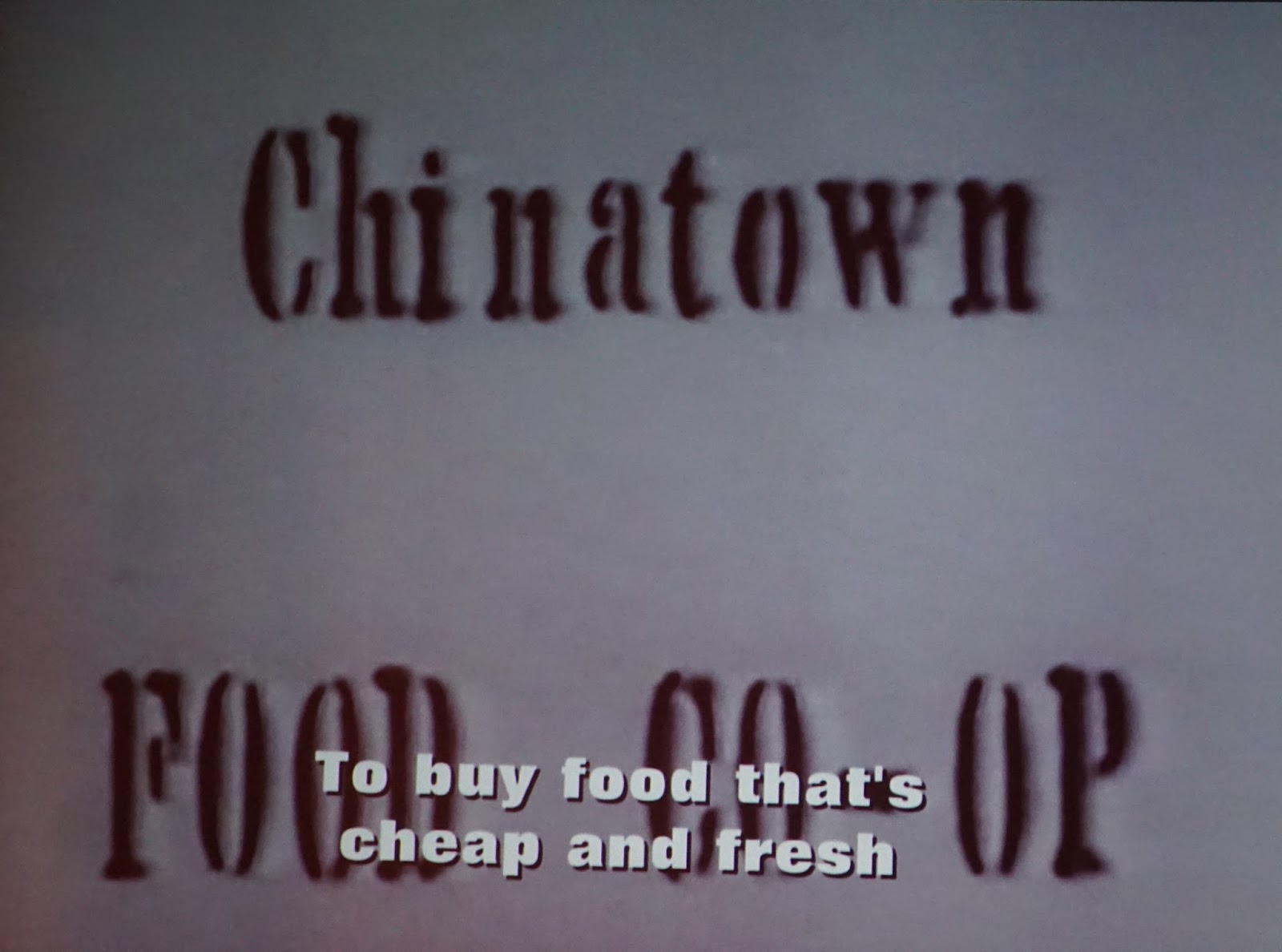
Chinatown Food Co-Op
Price List
A Consumer 
Snakeheads: The Chinese Mafia and the New Slave Trade
240 Chinese Remain in Jail
Mr. Kwong produced the 2010 Oscar-nominated short documentary film China’s Unnatural Disaster: The Tears of Sichuan Province, which depicted the Chinese government’s inept response to a catastrophic earthquake in 2008 that killed tens of thousands of people. The film was broadcast on HBO in 2009.


127 Children Were Killed

She Was in the 5th Grade
Numerous colleagues, friends, artists, and enthusiasts, as well as family members, attended the event, some reminiscing about their experiences with Mr. Kwong and the impact he had left on them, and the lives of others.

Add caption


Peter Kwong was a man who highlighted the raw and complex history of the Asian American experience --  he went beyond stereotypes, beyond the media, and beyond established assumptions. He created rich and detailed pieces of literature and artwork that highlighted the specific and complex narratives within Chinatown, that can simultaneously be gain empathy and support by other communities. His work reminds us of many things: that the beautiful can be flawed; that the vulnerable holds strength; that the divided can find unity; and that the powerless can become the powerful.

Rest in Peace, Peter Kwong
Original Photo by Zheng Lianjie

For more information about Mr. Kwong's Pulitzer Prize-nominated articles: http://www.villagevoice.com/news/rip-peter-kwong-who-chronicled-chinatown-drugs-and-race-for-the-voice-9811745
To watch the full version of China’s Unnatural Disaster: The Tears of Sichuan Provincehttps://www.youtube.com/watch?v=PfcHJAnrMoQ
*Please disregard the first few seconds of the video

Read more
Monday, April 10, 2017
Chinatown and the Department of Cultural Affairs Collaborate at the Florentine Music School

On April 1st, The Florentine Music School and the New York City Department of Cultural Affairs (DLA) facilitated an event that allowed Chinatown and the DCLA to collaborate together, in order to evaluate the Cultural Plan, and hopefully inspire local community members to create a cultural plan of their own.

Aside from bridging the gap between locals and officials, the event also provided the Asian American Arts Centre to promote the People's Cultural Plan. Bob Lee, who attended the event, explained that  it is important for officials and locals to be given a proper amount of time to communicate, and to form a cultural plan that satisfies both parties.

We thank DCLA and The Florentine Music School for facilitating the event, and for providing a space where two seemingly different communities are able to communicate and collaborate.


Participants
An Attendee Begins to Recite Poetry and Songs, Both in English and Chinese, for Five Minutes Straight

Olympia Moy (Right) and City Council Woman Margaret Chin (Left)
Ms. Chin Not Only Participated, but Also Stayed Throughout the Entire Event

*All photographs were taken by Bob Lee
Read more
Thursday, April 6, 2017
Rally for the Arts!!


On April 3rd, an assortment of artists gathered at New York City Hall in order to protest against Donald Trump’s plan to exterminate all outlays for the National Endowment for the Arts (NEA), the National Endowment for the Humanities (NEH), the Corporation for Public Broadcasting (CPB), and the Institute of Museum of Library Services (IMLS).

A View From the Outside
Photo by Baie Rogers
Inside
Photo by Bob Lee
As explained in a previous post about the NEA, the Federal Budget in 2016 was approximately $3.871 trillion; both the NEA and the NEH spent around $148,000,000 within the budget, which is, according to Washington Post’s Philip Bump, is only 0.03% of the overall budget — The NEA gave $14.5 million to 419 groups in New York City last year. However, Trump’s administration still wants to relocate money away from domestic (art) programs, and towards security and defense  — the proposed budget increases the two departments by $54 billion overall. 

The Rally to Save the Arts united a wide spectrum of artists who represent both the visual and performing arts: independent artists, the Asian American Arts Centre, the Actor’s Equity Association, New York Musician’s Union, and The Poetry Society of New York are some examples. 


Chuck Yeun, Whose Work is Featured in the AAAC's Permanent Collection, Attended the Rally
Photo by Bob Lee
Dion Chen Supporting the Actor's Equity Association
Photo by Bob Lee
DANCE EDUCATION FOR EVERY CHILD!
Photo by Baie Rogers
There were also some highly prestigious guest speakers, such as Queens Councilman and chair of the Cultural Affairs Committee, Jimmy Van Bramer. “President Trump’s budget is an unprecedented and vicious assault on the arts, the humanities, libraries,” he said. “President Trump talks a lot about making America great again, but you can never make anything great again by crushing its soul.”
Sami Shumays (Left): Founder and Director of Zikrayat -- Peter Koo (Right): Councilman (D-Flushing)
Photo by Bob Lee
Former Talking Heads frontman David Byrne also spoke at the Rally. He viewed Trump’s plan from a more economic lens. “You may hate the arts. You may hate the stuff that people paint and the theater that they do, but do you want to lose all those jobs? Do we want to kill this part of the economy? That’s just completely stupid.” He extends his argument in a self-written blog post, entitled What Good Are the Arts?:
“A recent study called Arts and Economic Prosperity found that nationally the non-profit arts (we're not talking about Broadway shows, pop concerts, video games, movies or the art world) generates $135.2 BILLION in economic activity in the US… In 2013, the production of arts and cultural goods added more than $704 billion to the U.S. economy. This amounts to 4.23% of GDP. The arts and cultural sector contribute more to the national economy than do the construction, agriculture, mining, utilities, and travel and tourism sectors.”


ALTERNATE FACTS
Photo by Bob Lee


City Council Speaker Melissa Mark-Viverito recalled the cultural impact the arts had left on her. “I came here at the age of 18, but my mother made it a point to take us to museums, to take us to the theater.” She later added, “Art and culture enhanced my life, gave me a perspective, an understanding of the world we live in, of our collective wellbeing, that we are not in this alone. That we can reach across the aisle and learn about other cultures, create a sense of understanding and camaraderie.”
SAVE THE ARTS Written in Five Languages: English, Spanish, Chinese, Korean, and Scottish Gaelic
Photo by Baie Rogers
The Protester Who Held the Sign SAVE THE ARTS in Five Languages
Photo by Baie Rogers
Actress Ciara RenĂ©e defended the arts by highlighting it’s more psychological impact. She said that the arts is a “collaboration of what is with what can be” and a “connection to something higher and more powerful than any stagnation or destruction and abundance, a surplus…Does that sound bad to you?” she said. “So it’s a wonder why the powers that be wanna take an ax to it, stop it in its tracks when it’s already placed at the bottom of the totem pole of existence?”

Jelani Remy, who portrays Simba in Broadway’s The Lion King, contributed his own personal stories relating to how important the arts were to him as a kid. He then lead the crowd, outside City Hall, in a rendition of “Over the Rainbow.” 

"Below is a picture of a high school senior who, when asked which of the arts she attributed to saving her life, she said, 'The visual arts.' I had a feeling that I had just taken a picture of the most profound sign at the Rally. So, let me thank Sara(h) for taking her picture." -Bob
ART SAVED MY LIFE
Photo by Bob Lee 
To quote Jimmy Van Bramer, "He [Trump] has come for artists and the cultural community today but first, the president came after Mexicans, then Muslims, then immigrants—including the undocumented—then it was the trans youth of our country, then the health of millions of Americans with Trumpcare and now he comes for us. But he was defeated on Trumpcare, wasn’t he? Because of rallies just like this. People taking to the streets saying that we will not accept this, this is not who we are. We are better than this.

National Priorities Statistics: https://www.nationalpriorities.org/budget-basics/federal-budget-101/spending/


Read more