Showing posts with label Advocacy. Show all posts
Thursday, May 11, 2017
Archival Alchemy: South Asian Women's Creative Collective

Archives play an integral role in daily life, yet they often remain obscured or overlooked. They allow viewers to receive glimpses of the past, of a life that they never experienced, and help reconstruct history; They become a foundation of knowledge and information for the academics and curious; They contribute to the formation and continuous evolution of identity. The form archives take are not restricted by documents, literature, or visual mediums: in fact, they are all around us. The clothes we wear, the objects we possess, and the things we carry on a daily basis: these are only a handful of examples of archives, items that can be used to reconstruct history and transform identities. The contributions archives make are, again, often disregarded or obscured because there are not many people who can identify the numerous forms they can take on. Thankfully, at the Abrons Arts Center, the true extent of archives was exposed.

Archival Alchemy
Photo by Bob Lee
Archival Alchemy: South Asian Women's Creative Collective was an exhibition, curated by Saisha Grayson, that used an assortment of archives in order to explore issues relating to assimilation,  marginalization, representation, and identity. Thirteen female South Asian artists contributed pieces that examined the history and present stance of South Asian women. Here is an official statement from South Asian Women's Creative Collective:

"At a moment when South Asian communities, women, and immigrant neighborhoods like the Lower East Side are being targeted by an evidence-averse administration, ​this exhibition will also offer an opportunity for nuanced reflection on the complex global and personal histories that shape conflicting views of our contemporary moment. Several works explore the role that archives play in creating official histories, papering over dissent and managing the disappearance of non-citizens, while others present or produce counter archives that resist such erasure and offer strategies for empowerment."

At the exhibition, an assortment of aesthetically-pleasing and personal pieces were displayed, all which provided political and social commentary on the lives of South Asian women. Here are a few examples of the pieces featured in the exhibition:

I Never "Ask for It" by Blank Noise:
Gathering together thousands of garments worn by those experiencing sexual harassment or violence, the ongoing project "counters the lie that women 'ask for it' through calmative, collectively-built testimonials reporting the truth of widespread, unchecked, unprovoked sexual aggression." The individuals who submitted clothes are labeled as "Action Heroes" -- ordinary citizen-participants taking action to tackle sexual assault. The diversity in styles -- children's cartoon t-shirts, modest cardigans, beach dresses, sweatshirts, and pajamas -- proves that "there is no outfit that women can wear that will stop what is ultimately a societal problem -- an entrenched rape culture that extends from excusing 'locker room talk,' ignoring street harassment, shame sexual assault victims, and failing to punish rapists, abusive spouses, and murderous partners to the full extend of the law." The display was supported by both text and audio clips.

 Garments Worn by Women Experiencing Sexual Harassment or Violence
Photo by Baie Rogers
 Garments Worn by Women Experiencing Sexual Harassment or Violence
Photo by Baie Rogers
The Scheherazade Project by Amy Khoshbin*:
The Scheherazade Project is a multimedia project that "merges live performance and an original score with animated Persian illustrations, images from the Iranian Revolution, found and newly created film footage, and immersive video game tropes to explore the power of storytelling, past and present." To view the entire feature, please feel free to click the link provided: https://vimeo.com/198574125

A Snippet from the Video
Photo by Baie Rogers
Another Snippet from the Video
Photo by Bob Lee
*The AAAC has written an extended piece about Amy Khoshbin. Please feel free to find the post on our blog.

Past and Present by Zinnia Naqvi:
Naqvi's series "uses family albums as a dynamic archives through which intergenerational identity construction and legacies of migration can be more precisely understood." There are two sets of photographs: one is an archival image that presents an migrant parent standing in their countries of origin; the second photograph is Naqvi's attempt to restage the original photograph using the parent's children. The process "reveals resonances that derive not only from familial resemblance, but from the children's tendency to be drawn towards or to create environments that offer points of connectivity."

Zinnia Naqvi's Project Past and Present
Image From Booklet
A Close Up
Photo by Bob Lee
Troy Towers by Patience Rustomji:
In her piece, discarded objects collected from her apartment complex are placed into glass vases, of all shapes and sizes, and are submerged in "cooking oil and spices traditionally used to preserve food" that were repurposed from her mother's kitchen. Rustomji "attempts to create an 'eternal present' for this imagined by invisible community by transforming detritus redolent of urban dislocation and alienation into 'a personal archive of desire, fantasy, and longing.'"

Patience Rustomji's Troy Towers
Image From Booklet

Another Vantage Point
Photo by Bob Lee
Perfect Love and Other Stories by Marium Agha:
Constructed with embroidery, recycled imagery, and found tapestries, Agha "dissects myths of love that accumulate across cultures, obscuring real experiences that run counter to formulaic fairytales." The rabbit featured in below is flayed, exposing threads and muscles. The pieces -- not displayed below is portrait that recreates Alice's White Rabbit, only it is instead made up of yarn and rope on fabric -- "court sensuous responses that, like their subject, exceed rationality."

Marium Agha's Perfect Love and Other Stories
Photo by Bob Lee

Index of the Disappeared by Chitra Ganesh and Miriam Ghani:
Following 9/11, there was a drastic shift in views towards security, privacy, Muslims, and immigrants. The ongoing archival project "is continually expanding to reflect the proliferating bureaucratic and legal mechanisms, and to appose the shift towards secrecy surveillance, and censorship, that have accompanied an unprecedented of disseverances, deportations, renditions, and detentions since 2001." The Index also provides "documents tracing the connections between increased immigrations enforcement and chilled speech, racial profiling, media representations of people of color, prison labor, the private prison industry, abuse in detention, corruption in ICE, militarization of the US-Mexio border, and the xenophobic histories of the 96 Laws, Japanese internment, and the Asian Exclusion Act."


The Index of the Disappeared 
Photo by Bob Lee
100 Days/16 Years
Photo by Bob Lee
Archival Alchemy achieved so much within it's small space: the exhibition provided a platform for an often overlooked demographic -- South Asian women -- to present their voices; the installations helped highlight complex but relevant issues that continue to shape the lives of every individual; the artists who contributed work brilliantly reminds viewers that archives are more than items: they are our stories and our identities.

On May 7th, Many of the Artists Held a Panel to Discuss Their Work
Photo by Bob Lee 
Links:
For more information about Archival Alchemy: South Asian Women's Creative Collection: http://www.sawcc.org/archival-alchemy-sawccs-20th-anniversary-exhibition/
For more information about the Abrons Art Center: http://www.abronsartscenter.org
For more information about Blank Noise and their ongoing project I Never "Ask for It": http://www.ineveraskforit.org/blank-noise
For more information about Amy Koshbin: http://tinyscissors.com
For more information about Zinnia Naqvi: http://www.zinnianaqvi.com
For more information about Patience Rustomji: http://www.patiencerustomji.com
For more information about Marium Agha: https://www.artsy.net/artist/marium-agha
For more information about Index of the Disappeared: http://www.mariamghani.com/work/626 
Read more
Thursday, May 4, 2017
Indira Freitas Johnson: An Artist Who Creates Hybrids Aimed to Advocate for Empathy, Community, and Peace

"I use symbols, rituals, and traditional expression as a means to discover, interpret and balance the culture and philosophy of my home country, India, with the here and now of my life in the U.S... I believe that combining the material and spiritual of in ritual expression is a way to discover and interpret the meaning of life. Ritual can transform meaning or objects and make them function physically as well as spiritually. Thus I believe that when common found objects are re-introduced into society, and presented in a ritualistic format, they acquire a renewed energy and the idea of sacredness of everyday life is confirmed" - Indira Freitas Johnson

Indira Freitas Johnson is a self-taught artist and an educator on nonviolence. Coincidentally, both of her occupations intersect beautifully, both acting as sources for inspiration and social reforms. "Much of my inspiration comes from transitory, ritualistic Indian folk art practices," she writes, "which I've used to address issues of labor, domestic violence, nonviolence and health education, adapting them to operate within contemporary experiences thus evolving a hybrid version of the original traditions. As a result, my work has always been informed by my experience of life in both, the US and India."


Indira's artwork falls under a "call and response tradition" that is frequently practiced in many cultures. Many of her pieces rely on responses from each community she visits, allowing their feedback to help finalize the results; in a way, her work is a hybrid, whose construction and completion relies on community interaction.

*Death and Rebirth (2003), linoleum black print
*Title Unknown (????), drawing 
*Virtue and Vice I (2003), hand embroidered organza
Throughout her career, Johnson's work is represented in an assortment of major private and public collections across the world including: Chicago Museum of Contemporary Art, Asian American Arts Centre (us!), Rhode Island School of Design Museum, Mobile Museum of Art (in Mobile Alabama), State of Illinois Building (in Chicago), Ankor Consultants (in Brussels), High Museum of Art (in Atlanta), Arkansas Arts Center and Decorative Arts Museum, University of Illinois Law School, Kohler Company (in Sheboygan, Wisconsin), High Museum of Art (in Atlanta, Georgia), SHARE, Air India Corporation, and Garden/Varelli -- the last three institutions are located in Mumbai, India.

Indira is also the founder of the Shanti Foundation for Peace, located in Illinois. The Foundation is a non-profit organization that "helps children realize their creative potential, equips teachers with new teaching tools, helps participants develop lifelong nonviolence decision-making and nonviolence skills, and enables schools and community organizations to advance their goals." In 2011, Shanti Foundation merged with Changing Worlds -- their missions is to "foster peace, acceptance, and understanding in the everyday interactions of people, by bringing visual, literary, and performing arts programs to schools and communities. Today, Shanti Foundation programs are now offered under the Changing Worlds' "umbrella." Here are examples of one of Shanti's art projects: greeting cards:

Shanti's Line Greeting Cards
Photograph Belongs to Changing Worlds
"Shanti’s line of greeting cards combine graphics designed by Johnson with distinctive quotes that challenge and inspire the reader. The quotes on all of our products are chosen to represent a variety of cultures, famous leaders, students, and unknown visionaries.  This diversity demonstrates the beauty of our differences and the similarities of our hopes and dreams" - Changing Worlds.

Recently, Johnson gave a magnificent TED Talk, at the University of Columbia College Chicago, on April 1st. There, she explains the significance a single individual can have on the entire world. To hear her talk, please feel free to visit the link: https://livestream.com/Tedx/tedxcolumbiacollegechicago
** She begins to speak at 6:12:00


Links:
For more information about Indira Freitas Johnson: http://www.indirajohnson.com
For more information about Shanti Foundation for Peace: http://www.arts.illinois.gov/arts-education-roster/shanti-foundation-peace
For more information about Changing Worlds: https://www.changingworlds.org
To view her TEDxColumbia College Chicago talk: https://livestream.com/Tedx/tedxcolumbiacollegechicago
** She begins to speak at 6:12:00

*All Images Are Featured in the Online Data Base: artsasiamerica.org
Read more
Thursday, April 13, 2017
Remembering Peter Kwong

Photo by Bob Lee

On April 9th, the Downtown Community Television Centre organized a community event to commemorate Peter Kwong, who had passed away on March 17. He was widely recognized for his passionate commitment to human rights and social justice. All photographs were taken by Bob Lee, who attended the event.


Audience

Peter Kwong (1941-2017) was Distinguished Professor of Urban Affairs and Planning at Hunter College, as well as Professor of Sociology at the Graduate Center of the City University of New York. Mr. Kwong not only was a pioneer in Asian American studies, but also a leading scholar of immigration. Mr. Kwong published many books that explored Chinatown, Chinese immigration and labor, and Chinese politics. He has written numerous books, including Chinese America: The Untold Story of America’s Older New Community, Forbidden Workers: Chinese Illegal Immigrants and American Labor, Chinese Americans: An Immigrant Experience, The New Chinatown, and Chinatown, New York: Labor and Politics 1930-1950. 

He also contributed to several English language publications, such as The National, the International Herald Tribune, the Globe and Mail, and Village Voice. He wrote several articles that touched upon controversial topics that not only effected the Asian American community, but also the entire world. On July 17, 1990, Mr. Kwong wrote an article entitled “The Year of the Horse,” which investigated the growing control of the heroin trade by Chinese organized crime. He also wrote an outstanding, eye-opening piece (that was published on June 9, 1992,) about the 1992 Los Angeles Riots: in his article “The First Multiracial Riots,” he argues that contemporary media reports fundamentally misunderstood the L.A Riots of 1992 as simply a “Black vs. White” phenomenon, when it was actually “the first multiracial class riot in American history.” Both of his articles were nominated for the Pulitzer Prize.
In an email, Joseph P. Viteritti, the Chairman of Hunter’s Urban Policy and Planning Department, wrote that Professor Kwong “challenges the notion that Asians are a model minority, revealing in his research widespread class divisions, poverty, exploitation, drug abuse and organized crime — all of which were exacerbated by decades of discrimination by a majority white society."

In addition to writing, Mr. Kwong also chronicled the Asian American experience through documentary films. He covered similar issues, ranging from a market in Chinatown to Chinese organized crime in New York, discussed in his articles and books, through his films.

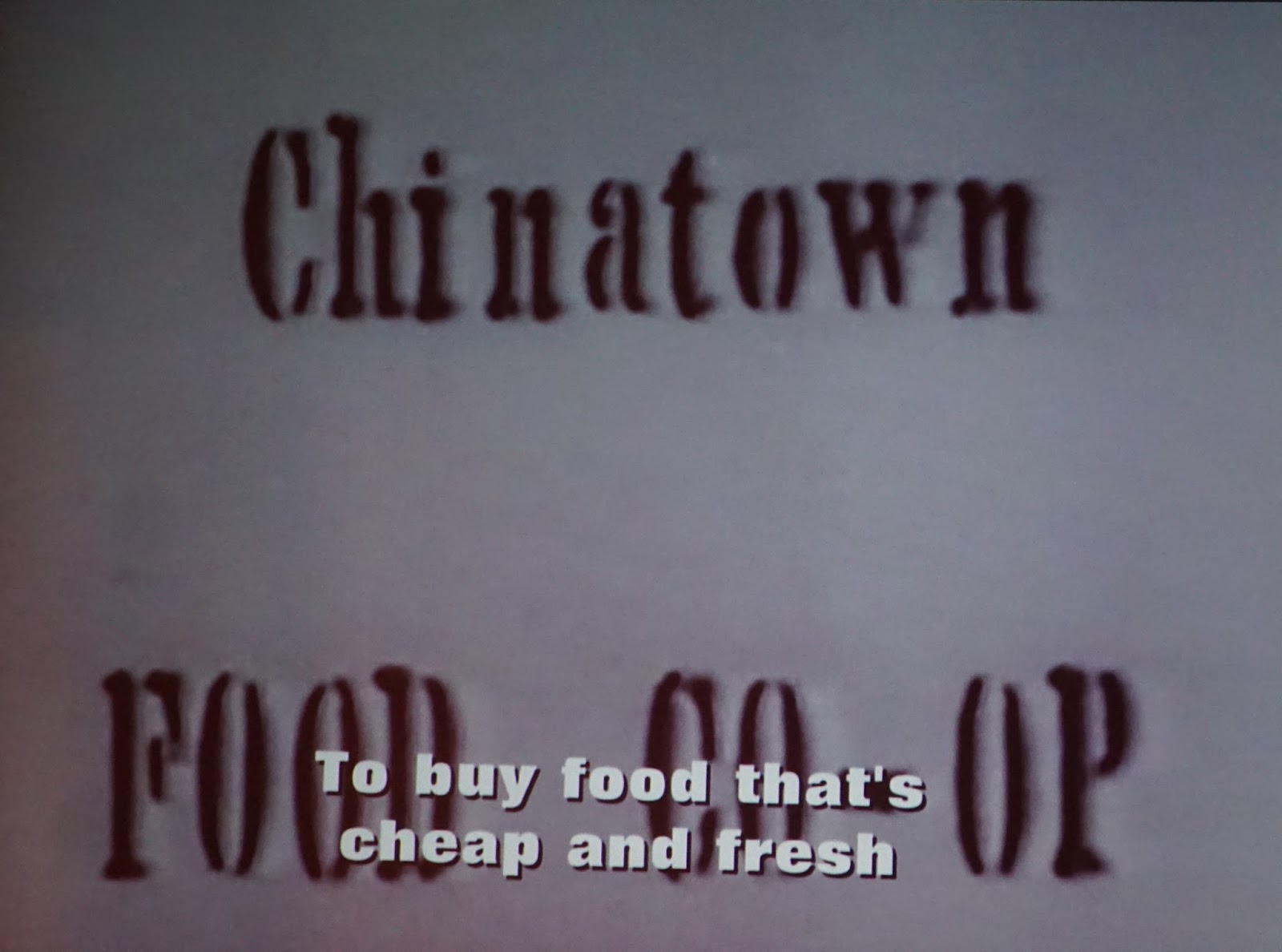
Chinatown Food Co-Op
Price List
A Consumer 
Snakeheads: The Chinese Mafia and the New Slave Trade
240 Chinese Remain in Jail
Mr. Kwong produced the 2010 Oscar-nominated short documentary film China’s Unnatural Disaster: The Tears of Sichuan Province, which depicted the Chinese government’s inept response to a catastrophic earthquake in 2008 that killed tens of thousands of people. The film was broadcast on HBO in 2009.


127 Children Were Killed

She Was in the 5th Grade
Numerous colleagues, friends, artists, and enthusiasts, as well as family members, attended the event, some reminiscing about their experiences with Mr. Kwong and the impact he had left on them, and the lives of others.

Add caption


Peter Kwong was a man who highlighted the raw and complex history of the Asian American experience --  he went beyond stereotypes, beyond the media, and beyond established assumptions. He created rich and detailed pieces of literature and artwork that highlighted the specific and complex narratives within Chinatown, that can simultaneously be gain empathy and support by other communities. His work reminds us of many things: that the beautiful can be flawed; that the vulnerable holds strength; that the divided can find unity; and that the powerless can become the powerful.

Rest in Peace, Peter Kwong
Original Photo by Zheng Lianjie

For more information about Mr. Kwong's Pulitzer Prize-nominated articles: http://www.villagevoice.com/news/rip-peter-kwong-who-chronicled-chinatown-drugs-and-race-for-the-voice-9811745
To watch the full version of China’s Unnatural Disaster: The Tears of Sichuan Province: https://www.youtube.com/watch?v=PfcHJAnrMoQ
*Please disregard the first few seconds of the video

Read more
Sunday, January 15, 2017
ZONED OUT!


At the Abrons Arts Center on Dec 12 2016, the authors of the book "Zoned Out!" and community organizers gathered to discuss the racial segregation, gentrification and displacement in neighborhoods like the Lower East Side and Chinatown.

Speakers:
Tom Angotti is Professor of Urban Policy and Planning at Hunter College, the Graduate Center, and City University of New York, and Director of the Hunter College Center for Community Planning & Development. He is author of New York For Sale: Community Planning Confronts Global Real Estate, which won the 2009 Davidoff Book Award.

Samuel Stein is a PhD student in Geography at the CUNY Graduate Center and holds a master’s degree in Urban Planning from Hunter College. In addition to teaching and studying urban geography, he worked as a researcher, organizer, and planner on numerous New York City union campaigns, tenant mobilizations, and public policy initiatives. 

Louise Velez is a native Puerto Rican and a long-time Lower East Side resident. In the 1970s she began organizing with fellow residents against unsafe housing conditions, evictions and displacement in the neighborhood. Velez is a member of Mujeres y Hombres Luchadores, and a Board Member of National Mobilization Against SweatShops (NMASS), where she is currently organizing public housing residents to demand repairs and to stop the sale of public land and assets.

Jei Fong is a staff member of Chinese Staff & Workers' Association with over 10 years of experience organizing workers in the workplace and community.

Sylvia Morse received her Master of Urban Planning degree from CUNY Hunter College, where she focused on housing and participatory planning. She is a lifelong New Yorker who has worked with community-based and nonprofit organizations dedicated to affordable housing, community-based planning, and racial and economic justice. 


Read more
Friday, September 30, 2016
Special Meeting in Chinatown

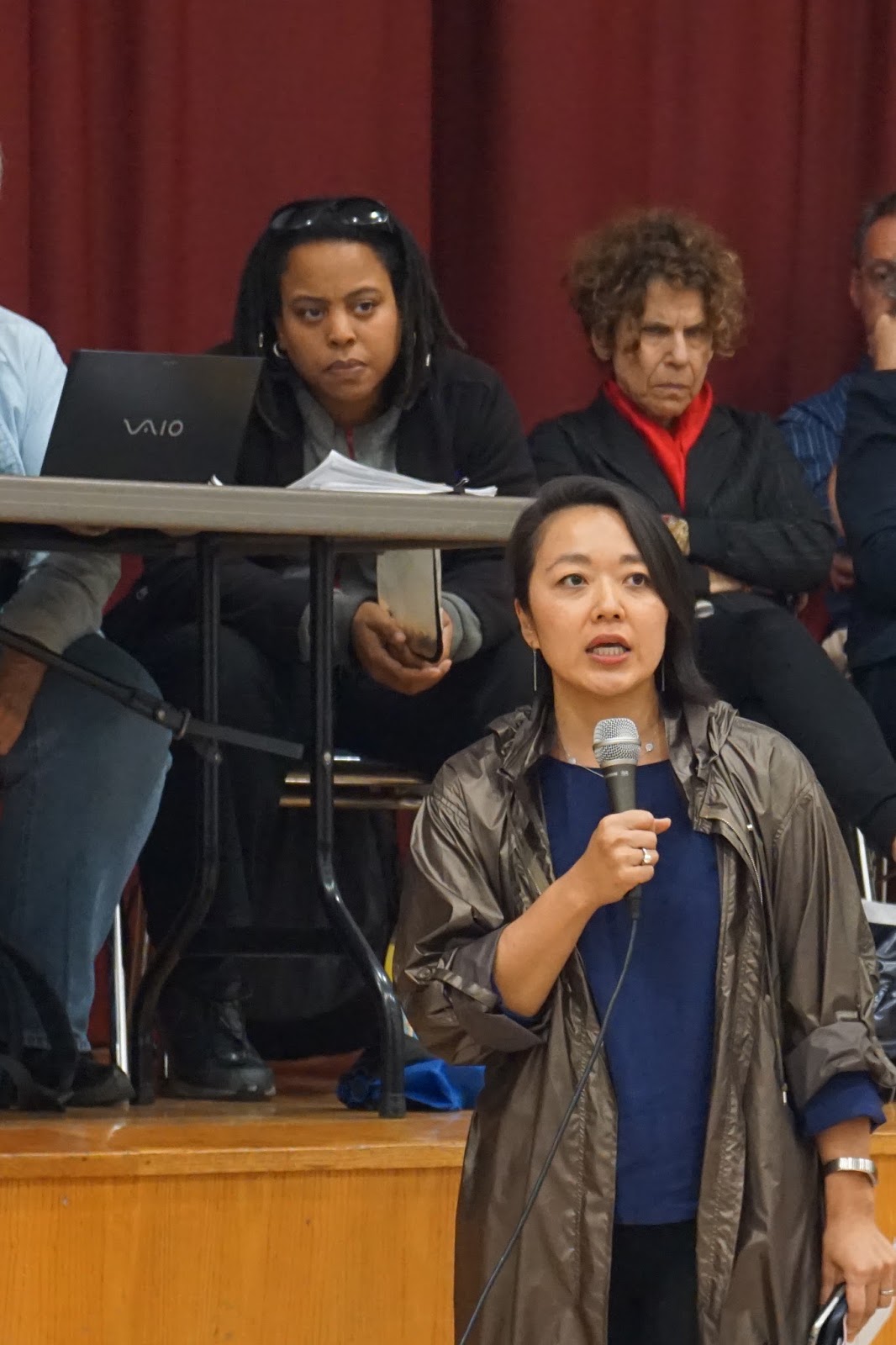
A special meeting of Chinatown Working Group (CWG) was called by the Community Board 3, bringing together members of the Department of City Planning (DCP). It is rare to have the DCP come to talk. The community is very upset after working for 8 years to produce 197a plan, then having the city refuse to look at it. Now there is an agreement that CWG will change the plan to 197c plan, so they’re only looking at certain portions of the plan (3 portions). They now want to hear from the community about recommendations so that DCP can begin to process it. 


Edith Hsu-Chen, DCP 
Manhattan Borough President Gale Brewer


An eloquent speaker from Community Board 3 

Margaret Chin 
A noisy demonstration out on the street began early by some of the more left leaning community groups that have been participating in the last several years of creating the plan. After some clarification of what the purpose of this meeting was, a number of the Community Board 3 members spoke of how much they support the CWG plan and how they refuse to be forced by DeBlasio’s DCP department. Some say it’s been 6 years of work. Whether it be 6 years or 8 years, it is scandalous that the city would sit by and let Chinatown work all those years and now refuse to examine the whole plan. Their explanation is that it will take a number of years just to really process the sections of the plan dealing with the local Chinatown zones. And it would simply take too many years to cover the other sections of the plan that deal with outlying areas. 

Unfortunately this includes the waterfront, where major construction is underway. DCP’s explanation for why there are no regulations for low income housing requirements along the waterfront is quite obscure, but apparently DCP staff are locked into the regulations of how the city requires R10 to be up zoned to MIG (don’t ask me what that means or if it’s correct) status. However, that’s the first explanation from the horse’s mouth I ever got in 8 years. Some groups will hate me for it, however, it’s clear that DCP staff are working within their own limitations. The outcry from some of the members of the Community Board 3 on stage is that this opportunity to have this rare meeting and not discuss all sections, particularly the waterfront, which itself could totally transform Chinatown, is a bureaucratic way to fail in addressing the need to save Chinatown and zone it adequately. 

By 8’ o clock, when the meeting ended, with some sense of having been productive, the City, the Community Board 3, and those of us who have stuck through  so many years of giving time and effort to Chinatown’s 197 plan, went home outside PS130. As I left, many of the key people were still standing at the front of the school, discussing all the issues. 

Amidst all the protest and confusion, I was able to insert into the discussion how the arts can bring greater prosperity to our community. 

I thank Margaret Chin for staying there for the complete meeting, even into the night, as she has done since I’ve known her for so many years. 

- Bob Lee, Executive Director of AAAC
Read more