Showing posts with label Chinese Related. Show all posts
Friday, June 29, 2018
Recognizing Tradition in Modernity: Recap of Yun-Fei Ji Panel Discussion with John Yau and Robert Lee

John Yau, Yun-Fei Ji, and Robert Lee at the panel at James Cohan Gallery
In celebration of artist Yun-Fei Ji’s recent solo exhibition “Rumors, Ridicules, and Retributions” at the James Cohan Gallery on 291 Grand Street, the Asian American Arts Centre organized a panel discussion at James Cohan on Saturday, June 9 that featured Yun-Fei Ji, art critic John Yau, and AAAC Executive Director Robert Lee.

To kick off the conversation, Yau interviewed Ji about his early life growing up in China and the development of his artistic and thematic sensibilities as Ji moved between various contexts on different continents over the course of his career. As Ji recounted his personal journey navigating childhood ghost stories, China’s political landscape, a master’s program at the University of Arkansas, and the New York City art scene, he corroborated the stark analysis posed by John Yau in the opening paragraph of his recent article in Hyperallergic: “[Ji] is a Chinese artist who isn’t just a Chinese artist, an American artist who isn’t just an American artist. When a curator at an American museum told him he couldn’t show his work because he is Chinese, he replied: ‘I am as American as Willem de Kooning.’... In the age of globalization and migration, both voluntary and forced, Ji is an artist who doesn’t quite fit comfortably into China or America.

As AAAC intern Amy Hong noted in a previous Artspiral blog article previewing Yun-Fei Ji’s exhibition and panel at James Cohan, the Arts Centre has supported Ji since the early days of his career by exhibiting his work on two separate occasions in the 1996 and ‘99—well before Ji became an internationally acclaimed artist. Reflecting on the question of identity, AAAC Director Robert Lee has emphasized that the Arts Centre considered Ji an Asian American artist back then and continues to see him in that light today. Lee maintains that Ji is an artist who “inherits the heritage of two or more major traditions, and understands the contradictions, paradoxes, and dilemmas of straddling multiple cultures as generative for renewal and social change.”

In the latter half of the 20th century, multiple generations of Chinese artists in China and the United States struggled with the issue of inhabiting an uneasy space between two cultures. Many of these artists looked upon China’s immense, rich artistic heritage as a burden; they resolved to become modern by rejecting centuries-old Chinese techniques and embracing wholly American styles of abstract expressionism, conceptual art, and minimalism. It is only within the past 20 years that a new generation of Chinese artists including Yun-Fei Ji has taken on the mantle of tradition once again, breaking new ground on ancient soil.

During the panel, Lee acknowledged these historical trends by raising the question of tradition and modernity in Ji’s work: How is it so easy for Ji to see himself as a modern artist although he uses traditional Chinese tools and methods? Rather than elucidate his internal mindset, Ji responded in a fashion that was as specular as his art: he reflected the question back at Lee, leaving the answer to the asker’s own interpretation. To Lee, then, Yun-Fei Ji’s art might be considered akin to a period film—in other words, Ji adopts a historical setting as a stage by which to address contemporary issues like gentrification and displacement.

In that vein, one audience member asked during the Q&A whether Yun-Fei Ji’s exhibition had been organized as a response to the controversy and community outrage surrounding James Cohan’s exhibition of Israeli-German-American artist Omer Fast’s solo installation August eight months ago. A representative of James Cohan Gallery clarified that Ji’s exhibition had already been scheduled months in advance of Fast’s exhibition.

Although neither Yun-Fei Ji nor Robert Lee weighed in on the question at the time, it goes without saying that the panel itself—which touched on Ji’s ability to connect themes of displacement and haunting across multiple cultures and social configurations—occupied a definitive space in relation to the issues highlighted by the Chinatown community’s reaction to Fast’s installation. By making a concerted effort to welcome Ji back to Chinatown and draw in community members for the event, the Arts Centre aimed to emphasize the value of the James Cohan Gallery as a contemporary art institution that can genuinely invigorate the cultural life of the community. Artists like Yun-Fei Ji whose works can span centuries and speak to a myriad of audiences are crucial to the AAAC’s mission of cultivating Asian American art and making it accessible to the world-at-large.

– Written by AAAC intern Jeremiah Kim
Read more
Tuesday, June 5, 2018
"Rumors, Ridicules, and Retributions": Yun-Fei Ji Returns to Chinatown

Asian American Arts Centre helps promote Yun-Fei Ji’s recent exhibition

Yun-Fei Ji, Last Days of Village Wen (detail), 2011

Yun-Fei Ji’s “Rumors, Ridicules, and Retributions” is on view at the James Cohan Gallery at 291 Grand St through June 17. Ji’s previous work addressed the effects of the Three Gorges Dam on community displacement. Much of his new work addresses a similar project, the Nan Shui Bei Diao, or South-North Water Division, which plans to divert water from rural areas to rapidly growing urban centers. The resulting displacement of rural Chinese communities can be viewed parallel to the displacement of Asian American communities in Chinatown due to gentrification, as well as broader discourse on immigration in the US and abroad; the implications of Ji’s work extend to various global populations and ideological debates. Ji’s usage of traditional Chinese painting techniques to represent these scenes of industrial disaster and political and cultural history is subtle, subversive, and immensely relevant.

Yun-Fei Ji is one of many artists who were supported by the Asian American Arts Centre in the early stages of their careers before achieving international fame. His return to Chinatown is significant as he continues to pose questions important to Asian American activism and situate Asian issues in the contemporary art world, breaking down the concept of “Asian” as “other.” Through exhibitions such as Ji’s, AAAC aims to break down the isolation of the Asian American/Chinatown community so its culture becomes as well-known as its cuisine, and Asian American art becomes integrated within an international and city-wide context. Yun-Fei Ji’s exhibition can be situated in the context of Chinatown, China, and other displaced communities and environmental discourses, making his work and his presence vital to AAAC’s mission.

Yun-Fei Ji, Mistaking Each Other For Ghosts, 2007

AAAC brought together and worked with local artists and cultural activists to explore and develop a positive approach to promoting this exhibition. Community cultural perspectives and viewpoints from China helped to inform the following statement released by AAAC:

“Yun Fei Ji is coming to Chinatown. Such a prominent artist who is internationally recognized has asked that his next exhibition in NYC opening on April 28th be in this community.  The last time he was here was in 96’ and 99’ when I had the chance to exhibit him at AAAC – Asian American Arts Centre. At that time he was an emerging artist.  Long before his work was featured in ‘Displacement: the Three Gorges Dam and Contemporary Chinese Art’ in 2008 where reports of the flooding of the Yangtze River were based on his own interviews, research and observations, that revealed the impact on the Chinese people and their environment became an international story. 
“As an American citizen he has seen other disasters, Hurricane Katrina, the financial crisis. His work has been about China, his quotes – ‘What do you do when so much control and power is concentrated in the hands of a few?’ ‘I saw…how the people who put in all the work paid the price, and the people who benefited from all the work paid no price.’ these are about China too, but their meaning has implications everywhere. This will be his sixth exhibition at the James Cohan Gallery over several years, some at their gallery in Shanghai.  This is the first however, on 291 Grand St.  
“ ‘I try to mimic the method that underlies …early Chinese characters: I invent forms that are like words to describe the world’ – Yun Fei Ji offers us as Chinese a way to describe the world, even the world of New York City. 
“I have had the chance to exhibit several artists who are well known today, Ai Wei Wei, Mel Chin, Martin Wong, Xu Bing, and Zhang Hongtu among them, but all before they became so prominent. This may be the first time I will have the chance to welcome such an important artist back to this community. More of us going to the opening night would make this a wonderful occasion.  Artists like these can give us and Chinatown itself a new image, can give us a sense of who we are today.”

James Cohan Gallery has represented Asian American artists for over ten years and we thank them for their support. AAAC also thanks Bill Weinberg and Rong Xiaoqing, who have written insightful articles on Yun-Fei Ji’s exhibition at Village Voice and Sing Tao Daily. AAAC additionally thanks John Yau, poet and art critic, for his participation in the discussion with Yun-Fei Ji and Bob Lee of AAAC on Saturday, June 9 – 4pm to 6pm at James Cohan Gallery. John was in the first panel talk AAAC sponsored in 1983 so it is most appropriate he joins us for this event.

Read more
Thursday, April 13, 2017
Remembering Peter Kwong

Photo by Bob Lee

On April 9th, the Downtown Community Television Centre organized a community event to commemorate Peter Kwong, who had passed away on March 17. He was widely recognized for his passionate commitment to human rights and social justice. All photographs were taken by Bob Lee, who attended the event.


Audience

Peter Kwong (1941-2017) was Distinguished Professor of Urban Affairs and Planning at Hunter College, as well as Professor of Sociology at the Graduate Center of the City University of New York. Mr. Kwong not only was a pioneer in Asian American studies, but also a leading scholar of immigration. Mr. Kwong published many books that explored Chinatown, Chinese immigration and labor, and Chinese politics. He has written numerous books, including Chinese America: The Untold Story of America’s Older New Community, Forbidden Workers: Chinese Illegal Immigrants and American Labor, Chinese Americans: An Immigrant Experience, The New Chinatown, and Chinatown, New York: Labor and Politics 1930-1950

He also contributed to several English language publications, such as The National, the International Herald Tribune, the Globe and Mail, and Village Voice. He wrote several articles that touched upon controversial topics that not only effected the Asian American community, but also the entire world. On July 17, 1990, Mr. Kwong wrote an article entitled “The Year of the Horse,” which investigated the growing control of the heroin trade by Chinese organized crime. He also wrote an outstanding, eye-opening piece (that was published on June 9, 1992,) about the 1992 Los Angeles Riots: in his article “The First Multiracial Riots,” he argues that contemporary media reports fundamentally misunderstood the L.A Riots of 1992 as simply a “Black vs. White” phenomenon, when it was actually “the first multiracial class riot in American history.” Both of his articles were nominated for the Pulitzer Prize.
In an email, Joseph P. Viteritti, the Chairman of Hunter’s Urban Policy and Planning Department, wrote that Professor Kwong “challenges the notion that Asians are a model minority, revealing in his research widespread class divisions, poverty, exploitation, drug abuse and organized crime — all of which were exacerbated by decades of discrimination by a majority white society."

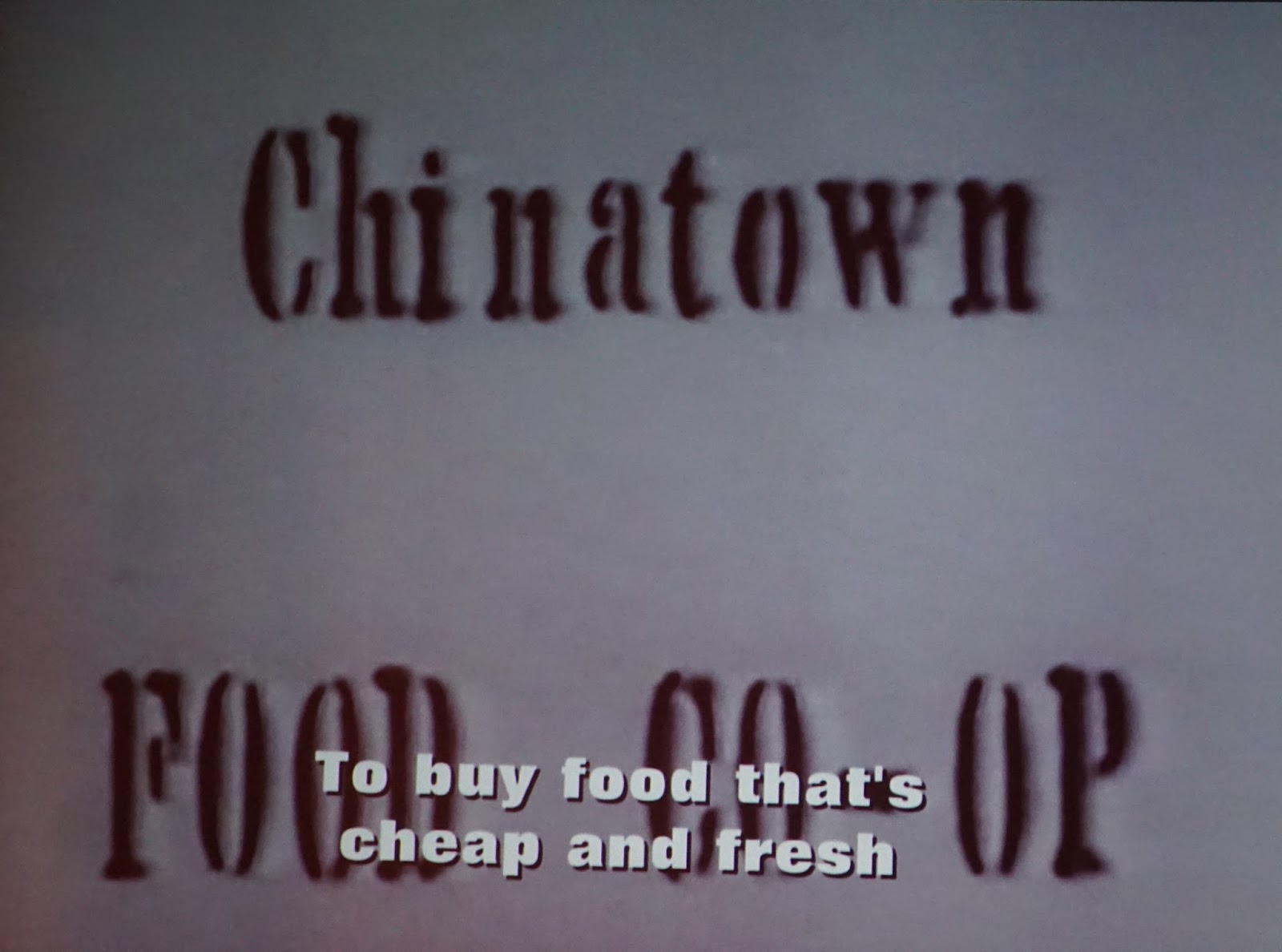
In addition to writing, Mr. Kwong also chronicled the Asian American experience through documentary films. He covered similar issues, ranging from a market in Chinatown to Chinese organized crime in New York, discussed in his articles and books, through his films.

Chinatown Food Co-Op
Price List
A Consumer 
Snakeheads: The Chinese Mafia and the New Slave Trade
240 Chinese Remain in Jail
Mr. Kwong produced the 2010 Oscar-nominated short documentary film China’s Unnatural Disaster: The Tears of Sichuan Province, which depicted the Chinese government’s inept response to a catastrophic earthquake in 2008 that killed tens of thousands of people. The film was broadcast on HBO in 2009.


127 Children Were Killed

She Was in the 5th Grade
Numerous colleagues, friends, artists, and enthusiasts, as well as family members, attended the event, some reminiscing about their experiences with Mr. Kwong and the impact he had left on them, and the lives of others.

Add caption


Peter Kwong was a man who highlighted the raw and complex history of the Asian American experience --  he went beyond stereotypes, beyond the media, and beyond established assumptions. He created rich and detailed pieces of literature and artwork that highlighted the specific and complex narratives within Chinatown, that can simultaneously be gain empathy and support by other communities. His work reminds us of many things: that the beautiful can be flawed; that the vulnerable holds strength; that the divided can find unity; and that the powerless can become the powerful.

Rest in Peace, Peter Kwong
Original Photo by Zheng Lianjie

For more information about Mr. Kwong's Pulitzer Prize-nominated articles: http://www.villagevoice.com/news/rip-peter-kwong-who-chronicled-chinatown-drugs-and-race-for-the-voice-9811745
To watch the full version of China’s Unnatural Disaster: The Tears of Sichuan Provincehttps://www.youtube.com/watch?v=PfcHJAnrMoQ
*Please disregard the first few seconds of the video

Read more