Tuesday, August 30, 2016
A Day in Philly: Robert Lee Tackles Cultural Equity in the City of Brotherly Love


Robert Lee, Executive Director of AAAC, recently spent a day in Philadelphia and found the city to be thriving in passion and art. Here are some pictures from his trip in Philly!

                            
I came across a Korean Dance Troupe from Korea, traveling through the US to connect with American people through traditional Korean culture. Beautifully danced, and the music was well done. Perhaps they timed it to be here during the DNC? 
...


Philadelphia has a Chinatown Gate. NYC Chinatown has been pushing for its own gate for years, ever since the BCLDC was established. AAAC exhibited a woman architect from China, Chen Xiao Rui, at that time who could build and ornament such a gate in the most authentic manner. NYC Arts Commission refuses permission - even though CCBA has money reserved to build it - because they are clearly prejudiced against traditional architecture. Chinatown seems to be thriving. Asian Art Initiative is on the adjacent outskirts along the highway, unfortunately not open on a Sunday.
...


I can only describe this mural as quite odd, one man in a submarine looking through a periscope, the other with a beard with beads praying. The small window or frame is on a perpendicular wall so this view seems like the two men are facing each other, both oddly in their own world, yet peering at each other.  
Perhaps just a property owners sponsored mural, pleasant  yet ....
                       

This was the only community or artist created mural that had some sense of NYC
      

I biked a bit around South Philly. Saw the neighborhoods and saw a number of murals, usually large like this one, never much graffiti or expressions of common people like we have in NYC. There are murals posted here that reflect a very different city with a different city mural program at work. Some murals are quite ambitious and elaborate, others I can only describe as quite odd - an unknown civic energy at work.

Meg Salesman apparently was commissioned for a number of these huge elaborate works. I see no graffiti anywhere on them.
...


Near the location where the DNC were gathering, a demonstration/ritual took place. After seeing several street actions and incidents in Philadelphia, the significance for Americans of this "DNC" was something that clearly touched them. The meaning and the hope for their country was deeply felt, enough to move many to take the actions they did.


"I stand by my sacred ground." A demo ritual on the streets of Philadelphia. Yes, there was an Asian American women who spoke passionately in this circle. She is in the blue long skirt near the sign.
...


Small local farmers sent their representative to be present at the start of this national moment. To show support he gave us his card - www.justriders.org. I just had to make sure I did not move my bike too close else she (the alpaca) would not like it.
...


The march down South Broad Street was quite long and filled half the street except for the beginning which was pushed to the sidewalk by a row of bike cops. I noted there were few Blacks and Asians scattered among the marchers; some, like the woman pictured, were media people. When I saw on the side a black family with several children standing on the side as spectators, I felt this was clearly a cultural event of the mainstream.

Jennifer Fredrich is the artist's name, written in the left corner of this artwork displayed before the thousands gathered began their march down South Broad Street on Sunday. It was too large to be carried in the march without a mobile framework.

There were many different people who took part in the march down South Broad Street. This was one of the more unusual people. Unfortunately, I lost track of him in the march and did not bump into him again until my bus was about to leave late that night. Aside from "Feel the Bern", there were appropriate sayings for many political leaders' positions.
...

So many streets look like long alleys, and the buildings are mostly two stories.


In the window are what looks like home made crosses and an arc. So may ethnic peoples have moved here. From one Indonesian restaurant I learned that several thousand Indonesians came in in 1998 after the massacre of Chinese there. 


This family scene reminded me so much of Newark in the old days.

This gathering is not too far from the Cambodian Church


An exceptional corner home
A few of these narrow residential streets did grow their own greenery
This is the Asian American Buddhist Association. Below is a view of a mural painted on the side of this building facing a large parking lot and a major road so this quite visible.
Several small squares with fountains and public benches are here and there. This one you can see a blue donkey painted with a Puerto Rican flag...
and some casual musicians 
Translation Please!  In one of the better parts of So. Philly some people were  painting this calligraphy and preparing to make a film with a large camera. Perhaps a political statement? If so then this was the only graffiti I came across with some political/social intent.  
The Philadelphia Acadamy of the Arts, a seemingly crashed plane serves as their mascot stuck between its narrow frontage. Prestigious art schools here. 
A city sponsored art fountain for children

Read more
Monday, July 25, 2016
Art Galleries in Chinatown: a community talk organized by W.O.W Project & Chinatown Art Brigade

W.O.W Project & Chinatown Art Brigade at Wing on Wo, 26 Mott, presents a community talk about art galleries in the neighborhood, how to turn this opportunity to befriend culture NYC style, undo the isolation that has hampered Chinatown's growth, and make our community and our artists an integral part of the infrastructure of the city's rapid change. 

A special mention to the new art space Chinatown Soup, whose young owner Michelle Esteva was open to all the different questions and critiques about its programming and exhibitions. Committed to make bonds with local communities, Michelle talked about the inevitable changes of Chinatown in the near future, which put a remarkable ending note after all those productive conversations.  


When the New Museum moved to the Bowery and the galleries followed suit, AAAC did a brief survey of some of the galleries. It was clear then that art patrons and community residents were strangers passing each other in the night.

For several years now we've encouraged the community, particularly the Chinatown Working Group (whose meetings are ongoing) to attend the New Museum's Community Breakfast they mount annually. However, it was only when a pop up gallery briefly occupied the arcade, filling it with people, that SingTao covered the story a year or two ago. 
It is great that a visible discussion of this development has begun. Perhaps the gallery community can be encouraged to do more than a token expression of their recognition of becoming a part, for the first time, of an ethnic NY community. 
It is really the New Museum's role to address the Asian American and other Lower East Side communities whose neighborhood they have made their home, bringing so many galleries with them. 
Clearly, community concern about gentrification goes way beyond the proliferation of galleries. To respond effectively we've got to use our smarts, be creative, build a relationship with the New Museum and turn the arts to our advantage. 
How do we use this opportunity to befriend culture NYC style and integrate traditional Chinese culture that has been part of the mix for every New Yorker? We need to undo the isolation that has hampered Chinatown's growth, and work together to make our community and our artists an integral part of the infrastructure of the city's rapid change.
Read more
Wednesday, June 29, 2016
Fay's Belated Birthday and Fundraiser

Happy Birthday Fay!
June 16 at the Project Reach NYC, 39 Eldridge St. office friends, family, and colleagues gathered together to celebrate Fay's 64th. Filled with live artist performances, donated art pieces, and birthday cake, this event brought together young and old with a love of the arts. The fundraiser was for the The Arts Initiative: A Legacy Project of the Basement Workshop Community, which creates a community space for cross generational arts and activism practices and facilitates community arts classes and workshops.


Read more
Wednesday, June 8, 2016
Goddess of Democracy Protests in New York

Weiming Chen's Goddess of Democracy statue has traveled cross country from L.A. and was here in New York not only to make the 27th anniversary of the crack down on the students in Tiananmen Square on June 4, 1989, but also in protesting China's policies in any number of inhuman treatments and policies occurring today


The Goddess of Democracy statue was placed outside the New York United Nations Headquarters. 


Read more
Tuesday, May 17, 2016
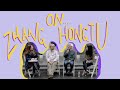
Video: Conversation with Zhang Hongtu and Robert Lee at Queens Museum

This video is a documentation of the Conversation with Zhang Hongtu and Robert Lee at Queens Museum. As the closing event of Hongtu's solo show at Queens Museum, this panel talk covers several major topics in Hongtu's unique life experience and legendary art career. See highlights below to forward to specific questions.


Highlights:

Hongtu discussing censorship in China and freedom in the US 00:25

Hongtu on his personal experience during Cultural Revolution & the worship of Chairman Mao 05:17

Hongtu reflecting on the use of Mao image in his early works 08:24

Robert Lee talking about Hongtu's work in the context of modern history and art history 13:27

Cheryl McGinnis pointing out the key differences between Hongtu's Mao image and Andy Warhol's use of Mao 19:37

Mark on the rarely known history of Hongtu and the Chinese artist group in 90's New York 22:40

Robert Lee on Hongtu's legacy and influence on Asian American Arts 36:30

Panelists:
Zhang Hongtu, Artist; Robert Lee, Director of Asian American Arts Centre; Luchia Meihua Lee, Guest Curator

Videographer/ Editor: Weigang Song
Read more
Sunday, April 3, 2016
Tai Chi with Eleanor Yung


Taichi Chuan, a martial art form of ancient China, promotes health and wellness. A series of slow continuous movements with low impact on the body, Taichi increases energy and vitality, relieves pain and fatigue, improves balance and coordination, as well as many other health benefits. Coordinated with breathing, Taichi Chuan is known as moving meditation, a practice done regularly builds to enhance mental acuity and wellness. 

Testimonial from a tai chi student.
I am 71.  I started studying Tai chi with Eleanor Yung in the 90's.  I was younger then and did not take my taichi seriously; it was something I did for fun. I stopped for a long while. Maybe six or seven years.  After I stopped I began to notice how my body aged I began to develop arthritis, I gained weight. One day I remembered my tai chi and started doing chapter one it was all I could remember so I did this occasionally and noticed how great I felt after doing it. I started taking tai chi again last year. I was desperate to learn all of the form. So I practiced everyday for one or two hours sometimes more. I also did my chi gung exercises before I did my tai chi as a warm up. This is the way Eleanor taught us long ago. I became more supple and tai chi strengthened both my legs and neck and improved my balance.  In the allergy season the taichi with the chi gung exercises lowers my immune response to pollen. I don't ever want to stop doing my tai chi again.    

For those interested, please register with Eleanor Yung L.Ac. at eleayung@gmail.com

Some articles of interest:


Eleanor Yung, L.Ac. has been teaching Taichi Chuan and Qigong for more than 20 years, and is teaching at the Pacific College of Oriental Medicine, Metropolitan Museum of Art, and private classes. She is a NYS licensed acupuncturist and practices in Chinatown. 
Read more
Wednesday, March 23, 2016
Brooklyn Museum Panthers Panel March 19, 2016

"The Role of Culture in Social Change" an inter-generational  conversation” was held at the Brooklyn Museum on Sunday March 20th. Presented were Kathleen Cleaver,  law professor and former Communications Secretary for the Black Panther Party for Self-Defense; Monica Dennis, NY organizer for Black Lives Matter; Professor Jamal Joseph, filmmaker, author and professor at Columbia University, and  the youngest member of the Panther 21; Carmen Perez, Executive Director of the Justice League; and Laura Whitehorn,  an organizer for the Release Aging People in Prison Project (RAPP) and former member of the Weather Underground. Moderator: Soffiyah Elijah, Executive Director of the Correctional Association.


At the conclusion questions were taken. As AAAC director I took the opportunity to ask a question given the Peter Liang/Akai Gurley issue. To paraphrase what I said or should have said if time allowed:

My question is on culture, cultural activism.
I was with IWK, I Wor Kuen*, sister organization to The Young Lords in 1969. To the former Black Panthers here, and White Allies in support, I express my gratitude for your devotion to your community, and the courage of your actions. To many in the Asian American Movement it is recognized the debt we owe you for inspiring us, and demonstrating how we could help our community. It is conceivable the Asian American Movement would not be what it is today were it not for your actions. I thank you.

I was also with Basement Workshop, the seminal arts organization at the beginnings of the Asian American Movement. For decades now my wife and I continue with  community cultural work. So many friends have developed their activism in social services, education, health, electorial  politics. The Movement has evolved. Yet few grasp why I work with artists.

I’ve heard Black Lives Matter, when asked where is their policy stance, or a draft of the bills they might propose, in response they have said such proposals and laws wont change hearts, where real change matters.

One of the exhibitions we did was called Ancestors**: a collaboration with Kenkeleba House in 1995. Its theme was the historical ties between African and Asian Americans. Acknowledging the rites and beliefs of diverse people permeate society, we wrote  “…we recognize the wealth of our heritage as Americans and encourage the act of paying homage to all the Ancestors of this Land” Twenty four artists were presented, many of them biracial. Howardena Pindell, Simone Leigh, Lily Yeh and Faith Ringgold were among them. One goal was to collect and document those historical ties, stories of the relationships between Asian and African Americans, stories like that of Lotus Do and Aukram Burton in Boston with artist Allan Crite. We did this and are still open to gather more. Prof. Burton in Louisville was ready to help gather these materials. However funding was not forthcoming to continue the project.

Given the current issue of Peter Liang and Akai Gurley, my question has to do with culture and the relations between African and Asian Americans – can you please speak to this. 
In reply several past approaches and projects were mentioned including the leadership of Yuri Kochiyama.

Note: One of the artists exhibited maternal grandfather was Howard Thurman, a theologian who founded the Fellowship Church of All Nations in the 1940s, a predecessor to Glide Memorial Church where poet Janice Mirikitani with her husband, Reverend Cecil Williams enabled, I understand, the congregation – composed of Blacks and Japanese Americans, to save their property and belongings after Pearl Harbor before leaving to the Internment Camps by transferring these to fellow parishioners.  Dr. Thurman himself went to India where he met Mahatma Gandhi.  He taught the young Martin Luther King, Jr. at Moorehouse University and influenced him with his introduction to the teachings of Non-Violence.  
* Righteous Harmonious Fist

** http://artasiamerica.org/documents/1710
Read more
Wednesday, March 9, 2016
Martin Wong Exhibition Tour

MARTIN WONG EXHIBITION TOUR

Saturday March 12th 1pm-3pm
 "Blue Voices", Martin Wong


Join us for an exhibition tour of Bronx Museum's extensive solo exhibition of Martin Wong’s art titled, “Human Instamatic”! 


Lead by Robert Lee, this will be the last week you can see it! 

$10, (free for high school and college students with ID). 

Special intro for those unfamiliar with fine art/Asian American art.

See for directions: http://www.bronxmuseum.org/visit

If coming from Chinatown take the D train to 167 St, walk two blocks south to 1040 Grand Concourse/ the Bronx Museum. (45min ride)

JOIN THE TOUR! RSVP – aaacinfo@artspiral.org.


From an Asian American perspective, it is important to appreciate and recognize the qualities Martin Wong enables Americans and Asian Americans themselves to see and recognize Asian values interfacing into our American culture. 

In his own way, Martin’s ethos is similar to Teh Ching Hsieh's profound expansive humanity. Teh Ching, whose several one year performances immediately made him an internationally important artist. The whole top floor of the Guggenheim Museum in 2009 The Third Mind exhibition was filled with just one of his one year performances - a worker punching time clock cards, every hour every day for one year. Martin's sense of compassion is related to this work.    

As Chinese Martial Arts teachings council, be mindful of the heavens in your posture (Martin's paintings often show the pattern of the stars) with feet squarely on the earth (earthen pottery initiates his career & continues with earthen pigments throughout his career) in this way connecting heaven and earth – a scholarly virtue. 

His paintings are covered with his own varied scripts, claiming his relation, in this way, to China's painting traditions. His paintings are rooted in his poetic spirit revealed in his early calligraphic poetry scrolls (See PPOW's website http://www.ppowgallery.com/exhibition/4097/work#&panel1-6). An Asian sensibility unleashed in the heart of the inner city, his visual poetry critiques US jails, ghettos, shuttered lives, that turn Sky into bricks, so lovingly painted. With his feet squarely on the earth (earthen pottery initiates his career; continues with earthen pigments) and his written scripts and star patterns in the sky, his connection to heaven and earth he is always mindful. Bricks are clearly his own Zen practice. Even his painting in bricks of a monumental penis is an Asian tradition - you can find circular stone trays of water fountains throughout China with a large stone erect motif as a central structure.  

Sad that his Asian faces are only mass media tropes, with none of the tenderness he renders in brown faces. Except of course, for his own and his parents, whose faces can be seen in a painting of a laundry storefront.  Some of his own portraits take part in Asian grotesqueries, however Pop.

Martin studied pottery in college, so his painting skill may be self taught. In that sense he could be termed possibly an outsider artist. In 1998, a year before his death at 53, in San Francisco Martin Wong was elected grand marshal of the city’s Chinese New Year Parade. Like his firemen so well equipped rendered as heroes, Martin Wong is himself a hero in painting the inner world of our inner cities in praise of what he saw there – its deep humanity.

Read more