Showing posts with label Activism. Show all posts
Tuesday, July 3, 2018
‘Detained’ in America: Immigration, Incarceration, and Imperialism in Diasporic Art


On June 27, the U.S. Supreme Court ruled 5 to 4 in favor of upholding President Trump’s travel ban against Iran, Libya, Somalia, Syria, and Yemen. Although the official majority position written by Chief Justice John Roberts shies away from an explicit alignment with anti-Muslim bias, the fact remains that imposing a prohibition on migrants and visitors from five Muslim-majority countries enacts a vicious ideology of nativism against Muslims and other communities that do not fit the criteria of white, Christian, English-speaking, Western educated, upper-class, able-bodied, documented citizen. The same logic can be applied to the Department of Justice’s announcement on June 29 that it would, after intense public outcry, keep immigrant families together—in indefinite detention.

These decisions, far from being exceptions to the rule of American values, merely continue a long tradition in the country’s history of criminalizing the migrations and movements of people of color in the name of “security”, “merit”, and “legality”.

As the American people are confronted with the compounding moral crises of unchecked ICE raids, immigrant concentration camps, anti-black police brutality, complicity in Israel’s ethnic cleansing of Palestine, federal-level assaults on the labor movement, and Islamophobic travel bans, they would do well to look to the past for clues concerning the cause and consequence of their country’s shameful behavior both within and beyond its borders. This behavior—all of it transpiring under the failed leadership of the U.S. political establishment—has evaded justice and public apprehension for decades, if not centuries.

In this context, the Asian American Arts Centre looks back to 2006, when the Centre organized Detained, an exhibition and panel discussion that approached questions of incarceration, racial profiling, immigration, visibility, interconnectedness, public memory, and injustice through the art and activism of Asian and Arab Americans situated amidst multiple diasporas. Responding in large part to the targeting of Muslim, Arab, and South Asian communities in the post-9/11 era, Detained exhibited a cross-cultural, multi-disciplinary selection of artists including Wafaa Bilal, Chitra Ganesh, Mariam Ghani, Dorothy Imagire, Pia Lindman, Trong Nguyen, Lina Pallotta, Jenny Pollack, Dread Scott, and Rene Yung. The accompanying panel featured five activists whose work converged on fighting detention under the U.S. military-prison-industrial complex: Palestinian rights campaigner Konrad Aderer, Monami Malek of Desis Rising Up and Moving (DRUM), Adem Carroll of the Islamic Circle of North America, Tushar Sheth of the Asian American Legal Defense and Education Fund (AALDEF), and Visible Collective.

AAAC, Exhibition postcard for 'Detained' (2006)

In addition to the panel and exhibition, Detained also featured a talk by James Yee, a former chaplain for the U.S. Army stationed at Guantanamo Bay who was arrested on unsubstantiated espionage charges and detained in solitary confinement for 76 days in 2003. Yee, a New Jersey-born Chinese American who converted to Islam, spoke out against the torture and unjust incarceration of Guantanamo’s Muslim detainees to whom he had been assigned to administer spiritual aid—and was tortured by his own country in return.

Turning to the artists, we witness parallels that run across (but do not negate) lines of race, time, gender, location, medium, and gesture. From the unsettling photographic/performance/video art of Wafaa Bilal’s “The Human Condition”, Trong Nguyen’s “Messages from Guantanamo”, and Jenny Polak & Dread Scott’s “Welcome to America”, to the archivalist re-creations of Chitra Ganesh and Mariam Ghani’s “Index of the Disappeared” and Dorothy Imagire’s “Japanese American Concentration Camp”, there runs a common ethos of making visible that which has been concealed from view in American culture. Much like Ganesh and Ghani’s interactive “Guantanamo Effect”, we can thread an incriminating red line linking out-of-sight, out-of-mind incarceration centers like Angel Island, Carlisle boarding school, Attica, Manzanar, Guantanamo Bay, Rikers Island, and Brownsville together: an unthinkable genealogy of grotesque relations.

Chitra Ganesh & Mariam Ghani, "Guantanamo Effect" (2013), digital catalogue. All credit goes to the artists

In that vein, Wafaa Bilal’s watershed 2007 exhibition “Domestic Tension”, though it was not featured in Detained, exposes the contradictions of U.S. imperialism in creating climates of total war and total indifference that simultaneously co-constitute and slip past each other—holding some in thrall so that the rest might be “free”. For 31 days, Bilal confined himself to a solitary room and placed his body at the mercy of a paintball rifle whose trigger could be pulled via an open-access chat room trafficked by thousands of visitors by the end of the month. The ceaseless rat-tat-tat of the rifle, the large splotches of yellow paint plastering the room, and Bilal’s vulnerable, fugitive figure are testaments to the faceless, nameless precision violence which the artist experienced firsthand as an Iraqi refugee who lost his brother to an unmanned U.S. drone strike in 2005.

bilal_wafaa_domestic_tension2
Wafaa Bilal, "Domestic Tension" (2007), photograph. All credit goes to the artist

So let’s expand our frame of reference: as Wafaa Bilal’s art shows us, detention, violence, and containment are issues that cannot be limited to sites existing within the mapped borders of the United States. All the different waves of migrants and refugees from Latin America, Africa, the Middle East, and Asia who have flocked to North America within the past hundred years—where are they coming from? And I don’t mean this in the No, where are you really from? sense. What I am asking is: what are the contexts, the conditions, the circumstances out of which certain groups of people have been compelled to take flight—and then get detained?

To try to answer that question, we need to start asking a larger set of questions: How many wars has the United States, whether by direct invasion or proxy campaign, started in the rest of the world? How many military bases have we—and I say we because most of us have consented to this peculiar government and its perplexing history—installed in countries that we have no conceivable right to occupy? How many violent coups and capitalist regimes have we financed in Central and South America? How many bombs have we dropped on Southeast, Central, and East Asia? How many tons of oil, rubber, cocoa, gold, salt, diamonds, ivory, and wood have we extracted from Africa—and for how much profit?

Interchange the recipients in each of the questions above and you’ll get directly variable results. However, the underlying function—U.S. imperialism—remains the same. At every link in the chain of the many diasporas implicated in the Detained exhibition, the myth of American benevolence crumples and collapses under the weight of its own deafening hypocrisy. People come to this country because this country has undermined and maimed their countries; we detain people from those countries because we believe they will undermine and maim this country. This empire.

Without losing sight of what is unfolding right before us—American state and corporate interests culling working class families and children for indefinite detention in euphemized concentration camps—we push forward through the veils of anonymity, indifference, and misinformation obscuring our view of the larger picture. No longer able to fool ourselves, art pushes us to confront the reality of the kind of people we really are—and the possibilities of who we might become.

Written by AAAC Summer intern Jeremiah Kim.
Read more
Sunday, August 13, 2017
Godzilla and Asian American Arts Centre

“So many I’ve had the chance to support, to see them all together, recognizing what they achieved, I feel fulfilled. How many years its been, regardless of how it happened -
I just want to congratulate each one, such a wonderful event marking a historic moment. Having An/other NY, a young new group pay tribute to them, and seeing how the cultural situation is morphing,  its clear what I did in the 80s and Godzilla did in the 90s has established Asian/Asian American art’s presence on the American landscape, laying a foundation for the future. As a second generation Asian American my concern for establishing a home on these American shores – a cultural acceptance – for people of Asian decent is no longer. We have a cultural voice, and its Asian inflections hold no small significance. We have a vital place in the discourse on visual arts and in the institutions where the public can access them, and in the contested spaces where cultural confrontations reinvent us anew.  I didn’t know I would ever see this day when I started. Amazingly its here.  Thanks to all who made it happen.” Written after the Godzilla event at Gallery Korea on May 23rd2017 by Bob Lee, Asian American Arts Centre.

From Godzilla’s Wikipedia page:
“Godzilla Asian American Arts Network was an arts collective and support network started in 1990 for Asian Americans. Founded on the premise that they did not have a suitable organization to promote, support and encourage their visual arts, Godzilla's founding members sought to fill this void.”

In the three interviews of the founders of Godzilla conducted by Alexandra Chang, see - http://as-ap.org/content/godzilla-0  - it is clear they were working at or with the Asian American Arts Centre at that time. 

How many years we had been working together nor how the split occurred will not be written here. .Suffice it to say their split from AAAC affected operations severely, the impact lasted for too many years,,, I too buried it at the advise of my board thinking that the AAAC archive is the best place to leave this story for those who want to know how change in grassroots activism really takes place within the context of late capitalism.* Now it’s clear that such things will not be unearthed, old wounds will not be allowed to heal with myths too popular to fade, and another revival is about to take place on August 10th. Only by choosing no longer to suppress them, to bring them into the light after so many years, will reconciliation be felt by those most effected. It’s good to know many Godzilla artists had no notion of what happened at the start and the work they did came from a positive place.

About a year or so later while working with TAAC, The Association of American Cultures, I came to visit Karamu House in Cleveland, Ohio, the oldest African-American theater in the US. In speaking with the director she shared with me their experience. Gathering African American artists together they developed a program to train them for the larger art world and when completed, ushered them out into this world. They met with such rejection that the artists returned and attempted to shut down Karamu House. When I heard this I remembered my own experience, how it felt like an embargo around Cuba, those years were hard. That's when I realized this was not a phenomena affecting only my organization nor only Asian Americans. The larger dynamics of the mainstream is not to allow an ethnic community to have strong leadership or any effective infrastructure other than in its own enclave. This is not the place to argue such questions. What became clear for me was such disputes within people of color communities and families were that people became merely pawns in a larger political/cultural contest. 
 
From left: John Allen, Nina Kuo, Lynne Yamamoto, Tomie Arai, Ryan Wong, Charles Yuen, Helen Oji, Herb Tam, Arlan Huang, Eugenie Tsai, Zhang Hongtu, (Sung Ho Choi not pictured).


Much is made of economic opportunity but in an ethnic community, particularly for Asians, we have to break our ethics of modesty, learn to be self promoting if not aggressive, exploit our own people to advance in a context where money means everything. Thus the idea of poverty pimps came to apply to non profits. When my generation were all volunteers at Basement Workshop in the early 70s and government grants were offered us, we knew what had to be done if we wanted to continue our work. When most of the volunteers left Basement years later it was because the way funding was allotted in the support of staff who had to have a way to live. Thus when actions were taken for our community or for artists, our motives were seen as tainted, even corrupted. The ethics of self gain as fundamental to society led in an ethnic enclave to tolerating this as a secular sin such that the natural tendency to gratitude was undermined. These and other factors may help to shed light on how to understand an ethnic community and the split with AAAC.

When artists as sensitive beings, had to fight for their identity, their humanity, to survive the streets of NY, our culture could only make a place for this as a fight for recognition, for status. (Asian American Art: A Community Based Perspective March 1997 in a Brandywine Workshop catalogue – Impressions: Contemporary Asian Artists Prints) It was called identity politics. Bumping into one another in a crowded subway even can be taken personally, a misunderstanding can be construed as a betrayal. Aside from the melodrama of betrayal that sells so many films, in NYC betrayal as a human perception has become a norm. Yet this is how I felt.

Whether it was my personality or my training as a historian, apparently I could not realize my goal as stated in 1983 at the Eye to Eye artist panel talk of enabling all to share and work together. As a curator I did what curators do in organizing exhibitions. So much for applying a historical approach to a contemporary context.  

Helen Oji with Charles Yuen & Herb Tam    
The tactic I evolved of an annual continuum of thematic Asian American art exhibition programs - repetition of the same refrain, a seemingly innocuous norm when there was no such thing on a societal level as Asian American art though there was Black art and Hispanic art - came about as a survival tactic
--- given the context of the 60s assassinations including Bruce Lee & his son, FBI Chinatown deportation raids in the 50s & IWK (I Wor Kuen where I was cadre) surveillance in early 70s, in 1969 asserting our cultural difference as Asian-Americans within the mainstream of Lower Manhattan at Basement, police violence in Newark in 68’ where I was raised, & decimation of the Black Panthers in 60s/70s, gang repression of IWK and AAAC in the 90s (see the New Yorker Magazine June 17, 1991 Gwen Kinkead pp56-84), the closing of Park Row by NYC Police Dept., being ignored and blackballed by pro Taiwan forces for anyone pro mainland China, being blackballed by the NYC press for several months based on quality, not race, as the only acceptable basis for exhibitions, and beginnings of Patient Rights at Gouverneur Hospital in early 70s with Chinese language rights being finally vouchsafed by the HHC (Health & Hospitals Corporation). Aside from barely survivable funding, a minimum was structured as visual events that open the door for cultural growth.

Godzilla artists I supported before 1990 worked together to achieve what AAAC saw as its mission. From 83’ to 90’ AAAC exhibited over forty Godzilla artists in twenty two exhibitions. AAAC continued support of several Godzilla artists throughout the 90s and beyond, ie., Charles Yuen, Arlan Huang, Colin Lee, Sung Ho Choi, Tomie Arai, Bing Lee, etc. The initial break with AAAC however hostile, freed Godzilla from the tone I had set, historical and serious to social and media savvy. The sensibility of a youthful, rebellious generation will out.
 
Zhang Hongtu with Eugenie Tsai & Sung Ho Choi       
Hidden in silence for twenty plus years, this story was mentioned in an essay of Young Park that was never published. Written in 2002 for the AAAC Story exhibition titled AAAC: its History of Reintegration, she wrote on page 9 of 15 pages "...Asian American Art community could have been much more powerful and generated strong impact ... I believe that the lesson between Godzilla and the Asian American Arts Centre would make their next generation vigilant and alert of their opportunities for forming a solid cultural unit of Asian American Art in the United States..." – maybe, but AAAC continued, key important exhibitions happened and continue to this day, issues of identity have found their place among many issues that give shape to art.  Thus from the vantage of this moment, Asian American art has established itself as a historical phenomena at minimum among many contemporary art circles. Public exhibitions as actions with printed cards documenting for its audience a message and action on a regular basis, even with minimal publish reviews, impacts consciousness, awakens others to action, and becomes part of the flow of the art community.

Lillian Cho, formerly of the Asian American Arts Alliance speaks from the audience
In 1994 the sudden news of Chinese contemporary artists signaled a shift of the art market, the next wave transformed perceptions of contemporary Asia through its art. That this signal was delivered by Asia Society indicates how well orchestrated is the American public's news about who Asia is becoming. This also indicates the significance of Asian American art is far beyond domestic borders.  After 911 the wars of South East Asia move to the Middle East, Muslims become the next racial target, OWS responded to the 2008 international financial crisis but it could not maintain the pressure, and now the Alt/Rt. presents us with alternative truths – another media driven perception. The media itself has transformed our attention and become part of the art culture that has merged Asian/Asian American art with the international Asian art spectacle (as in Field Meeting:Thinking Practice). The particular sensibility that Asian American domestic concerns bring has overlapped with art in Asia, and are yet raised in the public arena by Black Lives Matter, gentrification, immigration, and re-zonings, and they have become embedded in the art of local, regional, market and ethnic communities. The world is an aesthetic place, yes, and as we make a case for a multiplicity inclusive of Asia in each city’s tumultuous urban bubble our choices need to make space for what Gordon Hempton calls “One Square Inch of Silence”.
                                                         
For every non profit who was not appreciated for what they gave, Margo Machida's, not my own arrogance and shortcomings, are listed here:  
           She benefits from AAAC actions at the following events:

 Panelist on Eye To Eye  with Lucy Lippard, John Yau, etc 1983 ; Artists-in-Residence - a nine month residency 1984-85 ; AIR organizer, participating artist & speaker in a Symposium on Contemporary Asian American Art  - May 1, 1985 ;  Two Person exhibition with Charles Yuen entitled “Orientalism” April / May 1986 ; Artists Selection Committee & Wrote Exhibition Introduction for Roots to Reality II: Alternative Visions  Oct / Nov 1986 ; Chosen for a three person exhibition entitled “The Mind’s I, Part 2  with Luis Cruz Azaceta and Robert Colescott    March / April 1986 ; Guest Curator for Invented Selves  December 1988 ; Conference participant - Independent Curator/Cultural Critic   “The Players: Asian American Art”    A conference co-sponsored by AAAC & Asian/Pacific/American Studies Program & Institute at NYU)  with the AAAC Story exhibition  June 1, 2002 ; selection panelist for 12th Annual Exhibition: Contrary Equilibriums (A collaboration with The Korea Society)  Sept / Nov  2002   (This and more can be found at http://www.artspiral.org/exhibitions-timeline.php )

John Allen, Arlan Huang, & Colin Lee
  
Allexandra Chang’s book:  In the exhibition at the New Museum organized by Gregory Sholette in 1998 entitled Urban Encounters, six NYC art collectives were presented including Godzilla. Installed on the wall at the opening there was a large panel with the name of Basement Workshop on the top. On the bottom row was the name of Godzilla: Asian American Arts Network. In the middle was the name Asian American Arts Centre indicating the sequence how Godzilla evolved.  In Alexandra Chang’s book Envisioning Diaspora, Asian American Visual Arts Collectives: From Godzilla, Godzookie, to the Barnstormers on page 82-83 she displays a timeline poster, From Basement to Godzilla: The Legacy of Asian American Activism in the Arts. This timeline obscures the relationship between AAAC and Godzilla that the New Museum wall panel presented.  It did however hint at the relation between AAAC and Basement which Alexandra knows well since she was once staff with AAAC and was hired also to video document an AAAC event (Nov.03’) held upon the return of one of the seminal founders of Basement, Danny NT Yung where many of his friends were invited. (Dannys papers from those years are available to serious researchers through AAAC.)

Aside from a note on the New Museum’s exhibition I should mention a bit more about media. It is not lost to me that this effort at resolution is initiated and implemented on Steve Jobs computer.  The last thing he gave to all his friends was Yogananda’s book, the book that aided in his realization of intuition as his greatest gift. Yogananda himself completed his autobiography just after a nuclear weapon fell on Hiroshima. A recent film on his life indicates he returned to the US, despite the racism which drove him away to counter this global trend. The American astronaut Edgar Mitchell would have agreed with his intuitions given what he saw from his capsule's bubble. I would not be surprised if several Godzilla artists would agree also. Let then intuition have the final say on this matter. And let intuition guide us through our own tangled paths to the art and world we seek. 
Bob  Lee
 
Solar System by Charles Yuen   
* We are not free from the vanities and egoism that is common in a culture dependent on competition, just as no one is free of racism, of bias when it is so prevalent everywhere.  We can be critical of biases and point to them with righteous indignation, but that does not mean we ourselves are free of them.  In the 80s at CAPA's Annual Heritage Festival, with nearly fifty tables spread across Lincoln Center plaza, the cultural area was filled, each table a different Asian American organization, and each had their own T-shirt for sale. I remember how those on the next table looked so loathingly at our T-shirts. It was natural. Not Nature. Its capitalism. The worsening of these sentiments is what I refer to as Late Capitalism. That's what has come to a crisis now touching on everything, including NYC Cultural Plan (peoplesculturalplan.org) - unequal power dynamics and the struggle for equity and the pretense of justice.

 
Art Slam at AAAC jointly sponsored with Godzookie Nov. 15, 2003
Read more
Thursday, May 4, 2017
Indira Freitas Johnson: An Artist Who Creates Hybrids Aimed to Advocate for Empathy, Community, and Peace

"I use symbols, rituals, and traditional expression as a means to discover, interpret and balance the culture and philosophy of my home country, India, with the here and now of my life in the U.S... I believe that combining the material and spiritual of in ritual expression is a way to discover and interpret the meaning of life. Ritual can transform meaning or objects and make them function physically as well as spiritually. Thus I believe that when common found objects are re-introduced into society, and presented in a ritualistic format, they acquire a renewed energy and the idea of sacredness of everyday life is confirmed" - Indira Freitas Johnson

Indira Freitas Johnson is a self-taught artist and an educator on nonviolence. Coincidentally, both of her occupations intersect beautifully, both acting as sources for inspiration and social reforms. "Much of my inspiration comes from transitory, ritualistic Indian folk art practices," she writes, "which I've used to address issues of labor, domestic violence, nonviolence and health education, adapting them to operate within contemporary experiences thus evolving a hybrid version of the original traditions. As a result, my work has always been informed by my experience of life in both, the US and India."


Indira's artwork falls under a "call and response tradition" that is frequently practiced in many cultures. Many of her pieces rely on responses from each community she visits, allowing their feedback to help finalize the results; in a way, her work is a hybrid, whose construction and completion relies on community interaction.

*Death and Rebirth (2003), linoleum black print
*Title Unknown (????), drawing 
*Virtue and Vice I (2003), hand embroidered organza
Throughout her career, Johnson's work is represented in an assortment of major private and public collections across the world including: Chicago Museum of Contemporary Art, Asian American Arts Centre (us!), Rhode Island School of Design Museum, Mobile Museum of Art (in Mobile Alabama), State of Illinois Building (in Chicago), Ankor Consultants (in Brussels), High Museum of Art (in Atlanta), Arkansas Arts Center and Decorative Arts Museum, University of Illinois Law School, Kohler Company (in Sheboygan, Wisconsin), High Museum of Art (in Atlanta, Georgia), SHARE, Air India Corporation, and Garden/Varelli -- the last three institutions are located in Mumbai, India.

Indira is also the founder of the Shanti Foundation for Peace, located in Illinois. The Foundation is a non-profit organization that "helps children realize their creative potential, equips teachers with new teaching tools, helps participants develop lifelong nonviolence decision-making and nonviolence skills, and enables schools and community organizations to advance their goals." In 2011, Shanti Foundation merged with Changing Worlds -- their missions is to "foster peace, acceptance, and understanding in the everyday interactions of people, by bringing visual, literary, and performing arts programs to schools and communities. Today, Shanti Foundation programs are now offered under the Changing Worlds' "umbrella." Here are examples of one of Shanti's art projects: greeting cards:

Shanti's Line Greeting Cards
Photograph Belongs to Changing Worlds
"Shanti’s line of greeting cards combine graphics designed by Johnson with distinctive quotes that challenge and inspire the reader. The quotes on all of our products are chosen to represent a variety of cultures, famous leaders, students, and unknown visionaries.  This diversity demonstrates the beauty of our differences and the similarities of our hopes and dreams" - Changing Worlds.

Recently, Johnson gave a magnificent TED Talk, at the University of Columbia College Chicago, on April 1st. There, she explains the significance a single individual can have on the entire world. To hear her talk, please feel free to visit the link: https://livestream.com/Tedx/tedxcolumbiacollegechicago
** She begins to speak at 6:12:00


Links:
For more information about Indira Freitas Johnson: http://www.indirajohnson.com
For more information about Shanti Foundation for Peace: http://www.arts.illinois.gov/arts-education-roster/shanti-foundation-peace
For more information about Changing Worlds: https://www.changingworlds.org
To view her TEDxColumbia College Chicago talk: https://livestream.com/Tedx/tedxcolumbiacollegechicago
** She begins to speak at 6:12:00

*All Images Are Featured in the Online Data Base: artsasiamerica.org
Read more
Thursday, April 13, 2017
Remembering Peter Kwong

Photo by Bob Lee

On April 9th, the Downtown Community Television Centre organized a community event to commemorate Peter Kwong, who had passed away on March 17. He was widely recognized for his passionate commitment to human rights and social justice. All photographs were taken by Bob Lee, who attended the event.


Audience

Peter Kwong (1941-2017) was Distinguished Professor of Urban Affairs and Planning at Hunter College, as well as Professor of Sociology at the Graduate Center of the City University of New York. Mr. Kwong not only was a pioneer in Asian American studies, but also a leading scholar of immigration. Mr. Kwong published many books that explored Chinatown, Chinese immigration and labor, and Chinese politics. He has written numerous books, including Chinese America: The Untold Story of America’s Older New Community, Forbidden Workers: Chinese Illegal Immigrants and American Labor, Chinese Americans: An Immigrant Experience, The New Chinatown, and Chinatown, New York: Labor and Politics 1930-1950. 

He also contributed to several English language publications, such as The National, the International Herald Tribune, the Globe and Mail, and Village Voice. He wrote several articles that touched upon controversial topics that not only effected the Asian American community, but also the entire world. On July 17, 1990, Mr. Kwong wrote an article entitled “The Year of the Horse,” which investigated the growing control of the heroin trade by Chinese organized crime. He also wrote an outstanding, eye-opening piece (that was published on June 9, 1992,) about the 1992 Los Angeles Riots: in his article “The First Multiracial Riots,” he argues that contemporary media reports fundamentally misunderstood the L.A Riots of 1992 as simply a “Black vs. White” phenomenon, when it was actually “the first multiracial class riot in American history.” Both of his articles were nominated for the Pulitzer Prize.
In an email, Joseph P. Viteritti, the Chairman of Hunter’s Urban Policy and Planning Department, wrote that Professor Kwong “challenges the notion that Asians are a model minority, revealing in his research widespread class divisions, poverty, exploitation, drug abuse and organized crime — all of which were exacerbated by decades of discrimination by a majority white society."

In addition to writing, Mr. Kwong also chronicled the Asian American experience through documentary films. He covered similar issues, ranging from a market in Chinatown to Chinese organized crime in New York, discussed in his articles and books, through his films.

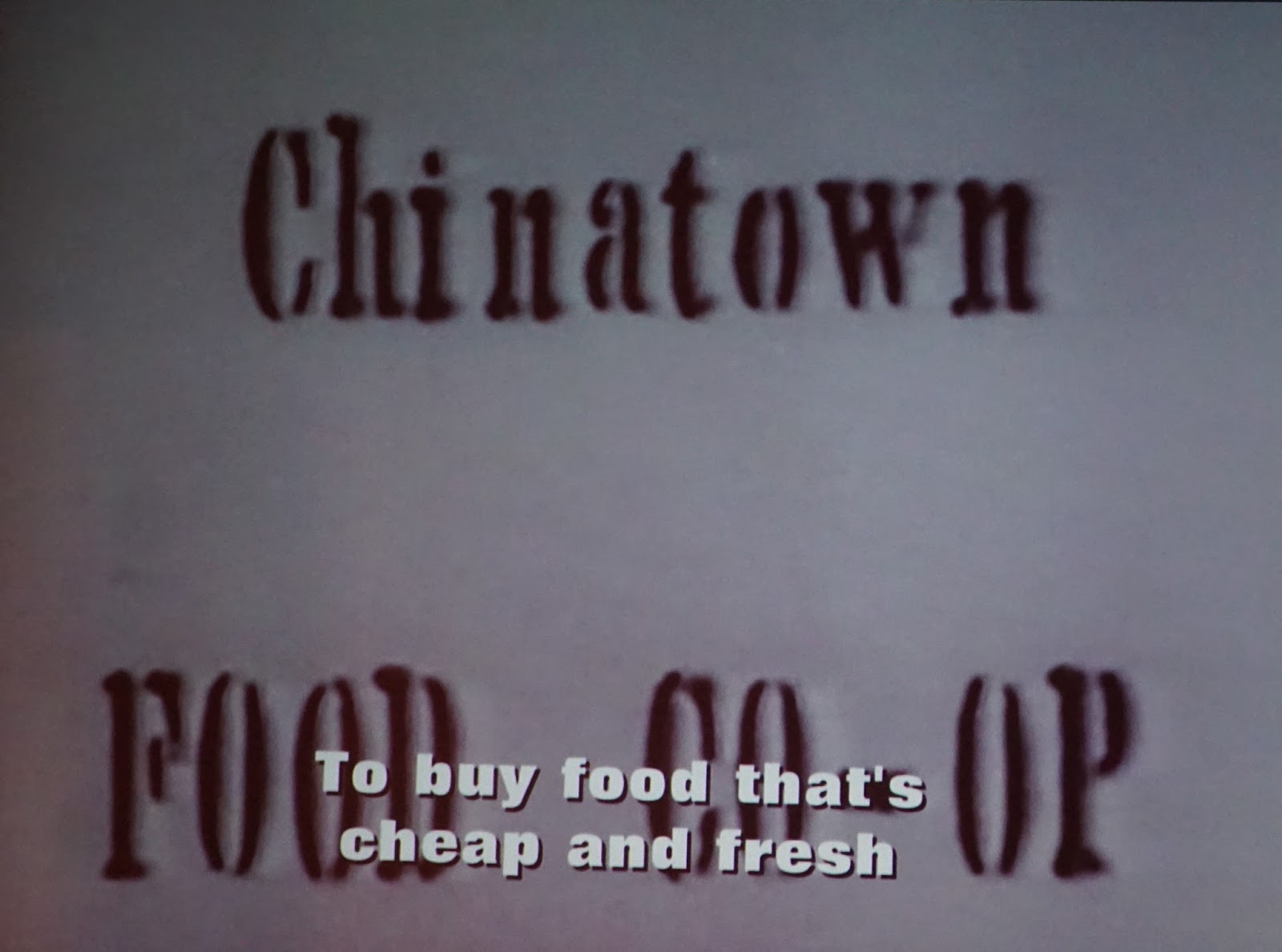
Chinatown Food Co-Op
Price List
A Consumer 
Snakeheads: The Chinese Mafia and the New Slave Trade
240 Chinese Remain in Jail
Mr. Kwong produced the 2010 Oscar-nominated short documentary film China’s Unnatural Disaster: The Tears of Sichuan Province, which depicted the Chinese government’s inept response to a catastrophic earthquake in 2008 that killed tens of thousands of people. The film was broadcast on HBO in 2009.


127 Children Were Killed

She Was in the 5th Grade
Numerous colleagues, friends, artists, and enthusiasts, as well as family members, attended the event, some reminiscing about their experiences with Mr. Kwong and the impact he had left on them, and the lives of others.

Add caption


Peter Kwong was a man who highlighted the raw and complex history of the Asian American experience --  he went beyond stereotypes, beyond the media, and beyond established assumptions. He created rich and detailed pieces of literature and artwork that highlighted the specific and complex narratives within Chinatown, that can simultaneously be gain empathy and support by other communities. His work reminds us of many things: that the beautiful can be flawed; that the vulnerable holds strength; that the divided can find unity; and that the powerless can become the powerful.

Rest in Peace, Peter Kwong
Original Photo by Zheng Lianjie

For more information about Mr. Kwong's Pulitzer Prize-nominated articles: http://www.villagevoice.com/news/rip-peter-kwong-who-chronicled-chinatown-drugs-and-race-for-the-voice-9811745
To watch the full version of China’s Unnatural Disaster: The Tears of Sichuan Province: https://www.youtube.com/watch?v=PfcHJAnrMoQ
*Please disregard the first few seconds of the video

Read more